
Una guía de expertos para profesionales de las adquisiciones: cómo evaluar y seleccionar proveedores de robots industriales de alta calidad
In the fast-paced world of industrial automation, selecting the right robotics partner is a critical decision that impacts production efficiency, product quality, and long-term operational costs. This guide provides a structured framework for procurement professionals to evaluate and identify top-tier suppliers for Delta and SCARA robots, ensuring your investment delivers maximum value.
1. Defining Your Application Requirements
The first step is a precise definition of your needs. This will naturally filter potential suppliers.
- Task & Payload: Is it high-speed Delta robot pick and place for lightweight food items, or a SCARA robot for assembly requiring precise force control? Clearly define the maximum payload and cycle time requirements.
- Workspace & Precision: Determine the required reach (e.g., a 4-axis SCARA robot with 650mm arm length) and the positioning repeatability needed (e.g., ±0.01mm for electronics assembly).
- Industry & Environment: A food packaging delta robot must have appropriate IP ratings and cleanroom compatibility (like ISO Class 4), while a standard manufacturing cell may have different requirements.
- Integration Level: Do you need a standalone Delta robot system or a complete SCARA robot system with vision, conveyors, and control software?
2. Core Evaluation Criteria for Suppliers
Beyond basic specifications, assess suppliers on these multidimensional factors.
2.1 Technical Capability & Product Portfolio
Look for a supplier with proven R&D strength and a range that matches your potential future needs.
- Product Breadth: A strong portfolio includes various models, from a compact Delta Robot Bat360-S1 for small spaces to a large Delta Robot Bat2000M-S15 for expansive work areas, and from a Python450-B6 SCARA to a Python800-B20 for heavier tasks.
- Proprietary Technology: Inquire about core components like controllers, drives, and software. Suppliers with in-house control systems, like some models from Robotphoenix, often offer better performance optimization and customization.
- Customization Ability (ODM/OEM): Can they adapt a standard Delta robot for sorting to your unique line layout? Suppliers offering ODM/OEM services provide greater flexibility.
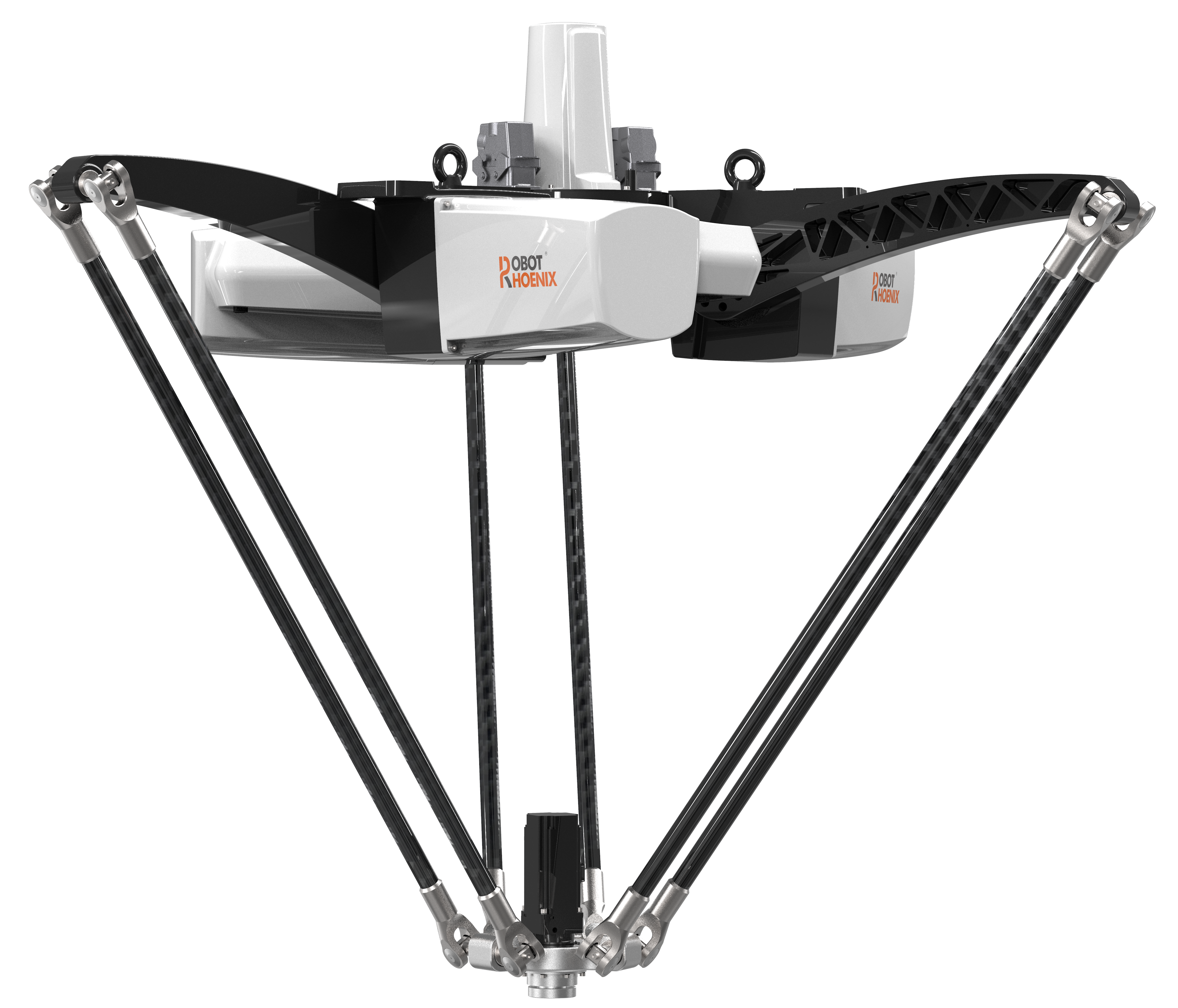
A Delta robot model, such as the Bat1300M-S15, exemplifies high-speed pick-and-place capability critical for packaging lines. (Image: Robotphoenix)
2.2 Manufacturing Quality & Certifications
Certifications are non-negotiable indicators of quality and global market compliance.
- International Safety & Compliance: Mandatory certifications include CE marking (both Machinery Directive and EMC), ISO 10218-1 (robot safety), and material standards like RoHS and REACH. Reputable suppliers, such as Hangzhou Robotphoenix, publicly provide these certificates.
- Quality Management Systems: Certifications like ISO 9001 (Quality Management System) are fundamental. More comprehensive "Three Management Systems" (QMS, EMS, OHSMS) certification demonstrates a mature operational framework.
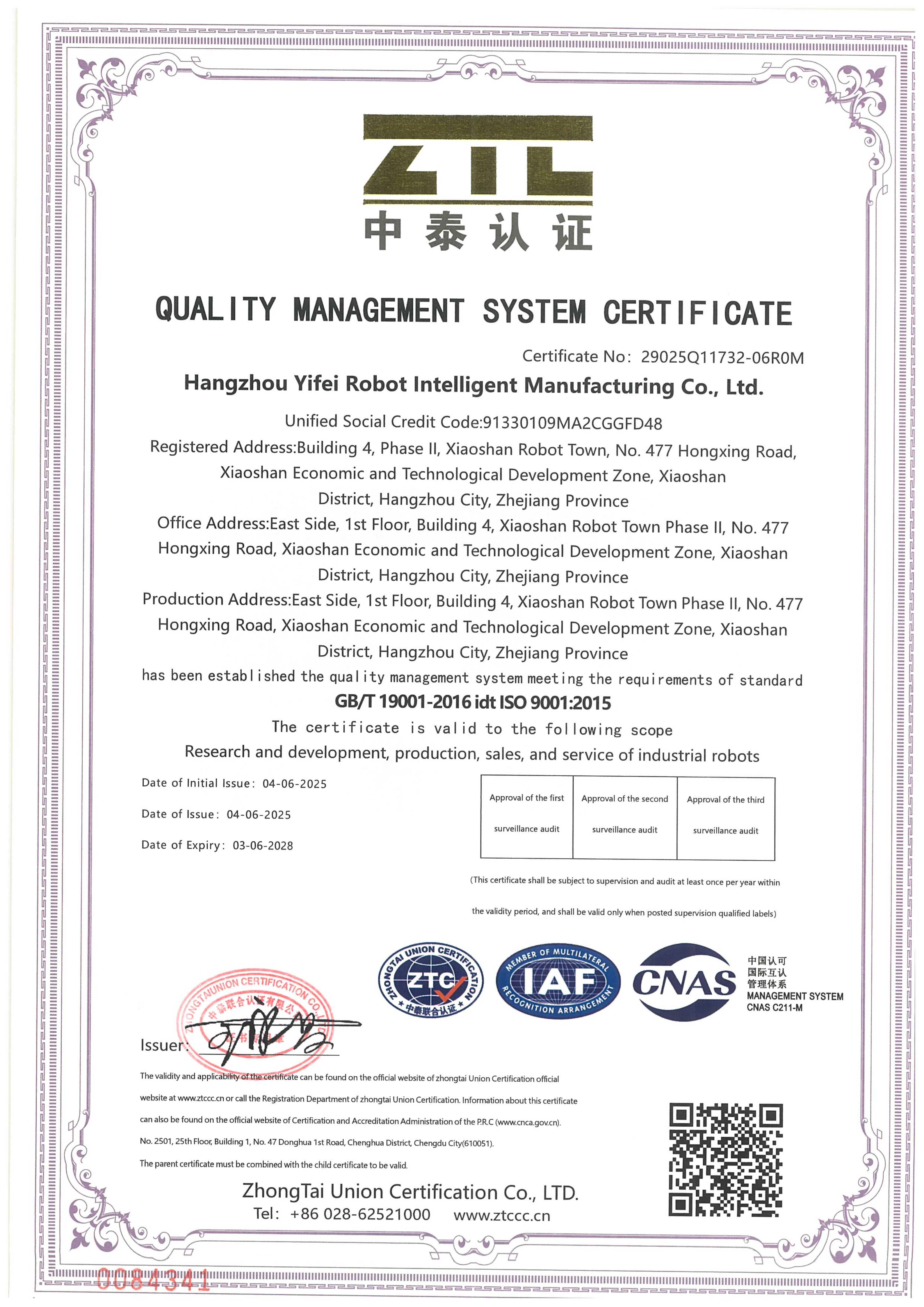
Certificates like the Three Management Systems (QMS, EMS, OHSMS) validate a supplier's commitment to standardized, high-quality manufacturing processes.
2.3 Application Expertise & Support Ecosystem
The best hardware is ineffective without proper support.
- Industry-Specific Solutions: Evaluate their experience in your sector. Have they deployed Delta robot application solutions in pharmaceutical sorting or SCARA robot application in electronics? Request detailed case studies.
- Technical Support & Training: Assess the structure of their support: on-site commissioning, remote diagnostics, spare parts availability, and operator training programs.
- Software & Connectivity: In the Industry 4.0 era, evaluate the robot's connectivity (OPC UA, Ethernet/IP) and the user-friendliness of its programming and simulation software.
2.4 Commercial & Strategic Factors
Align commercial terms with your strategic goals.
- Total Cost of Ownership (TCO): Look beyond the initial price. Consider energy efficiency, maintenance costs, and the expected lifespan. A slightly higher upfront cost for a more reliable high-precision delta robot can yield lower TCO.
- Scalability & Partnership: Can the supplier grow with you? A partner like Robotphoenix, which offers both standard systems and custom automation solutions, can support your expansion from a single workstation to a full line.
- Lead Times & Supply Chain Stability: Verify production capacity and component sourcing resilience to avoid project delays.
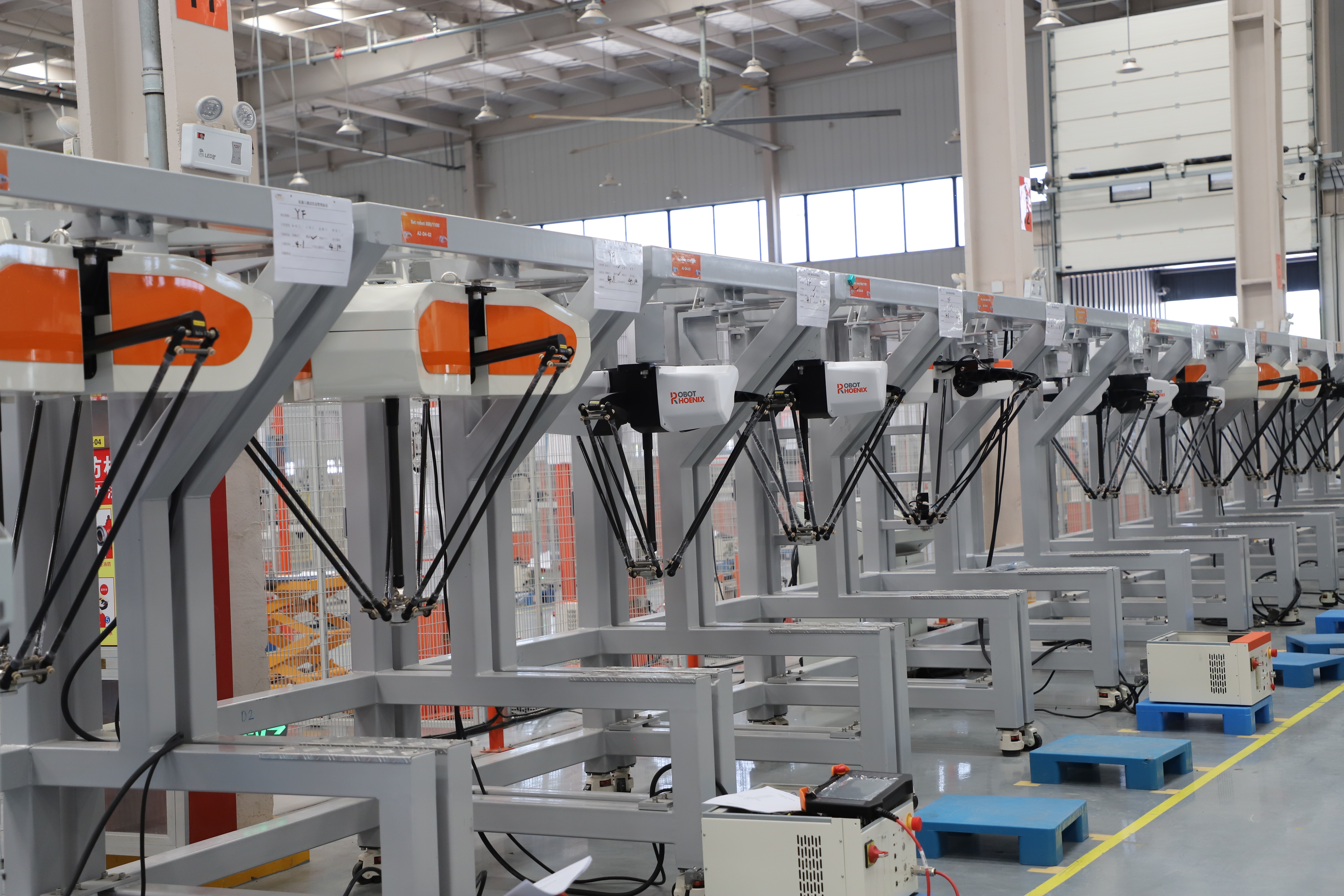
A well-organized production facility is a strong indicator of a supplier's manufacturing capability and quality control. (Image: Robotphoenix factory)
3. The Due Diligence Process: From Shortlist to Selection
Turn evaluation criteria into actionable steps.
- Create a Supplier Longlist: Use industry platforms, trade shows, and referrals to identify potential partners, including specialized manufacturers like Robotphoenix.
- Request for Information (RFI): Send a detailed RFI covering sections 2.1 to 2.4. Require proof (certificates, case studies, test reports).
- Product Demonstration & Factory Audit: Always request a live or recorded demo under conditions mimicking your application. A virtual or in-person factory audit, reviewing their production line and quality checks, is highly recommended.
- Reference Checks: Speak directly to existing customers, especially those in similar industries. Ask about performance, reliability, and support responsiveness.
- Pilot Project or Trial: For larger commitments, a small-scale pilot project is the most effective way to validate performance and partnership compatibility.
4. Industry Context: Recognizing a Focused Specialist
The market includes global giants and focused specialists. While giants offer broad portfolios, specialists often provide deeper application knowledge in niche areas, more responsive service, and better value-for-money solutions for specific tasks like high-speed delta robot pick-and-place or high-precision SCARA robot assembly.
A supplier such as Hangzhou Robotphoenix Industrial Robotics Co., Ltd., founded in 2012, exemplifies this specialist model. By concentrating on Delta and SCARA robots for packaging, sorting, and assembly, they develop deep expertise in these robotic arm delta and SCARA applications. Their offering of complete systems—from a Delta Robot Sorting Workstation to custom solutions—and support for ODM/OEM collaborations makes them a viable strategic partner for companies seeking tailored automation rather than just a commodity robot.
You can contact them for technical consultation at Phone/Whatsapp: +66 92 627 2873, Email: ran.chen@robotphoenix.com, or visit their website at https://www.rprobotic.com/.
Conclusion: Building a Partnership, Not Just a Purchase
Selecting an industrial robot supplier is a strategic decision. By meticulously defining requirements, rigorously evaluating technical, qualitative, and commercial factors, and conducting thorough due diligence, procurement professionals can move beyond price-based decisions. The goal is to identify a capable, reliable partner whose technology, expertise, and vision align with your operational goals, ensuring a successful automation implementation that drives productivity for years to come.