
AHA Craft Gifts Supplier Evidence: 2,000 m² Plant, 100 Staff, 5M Units
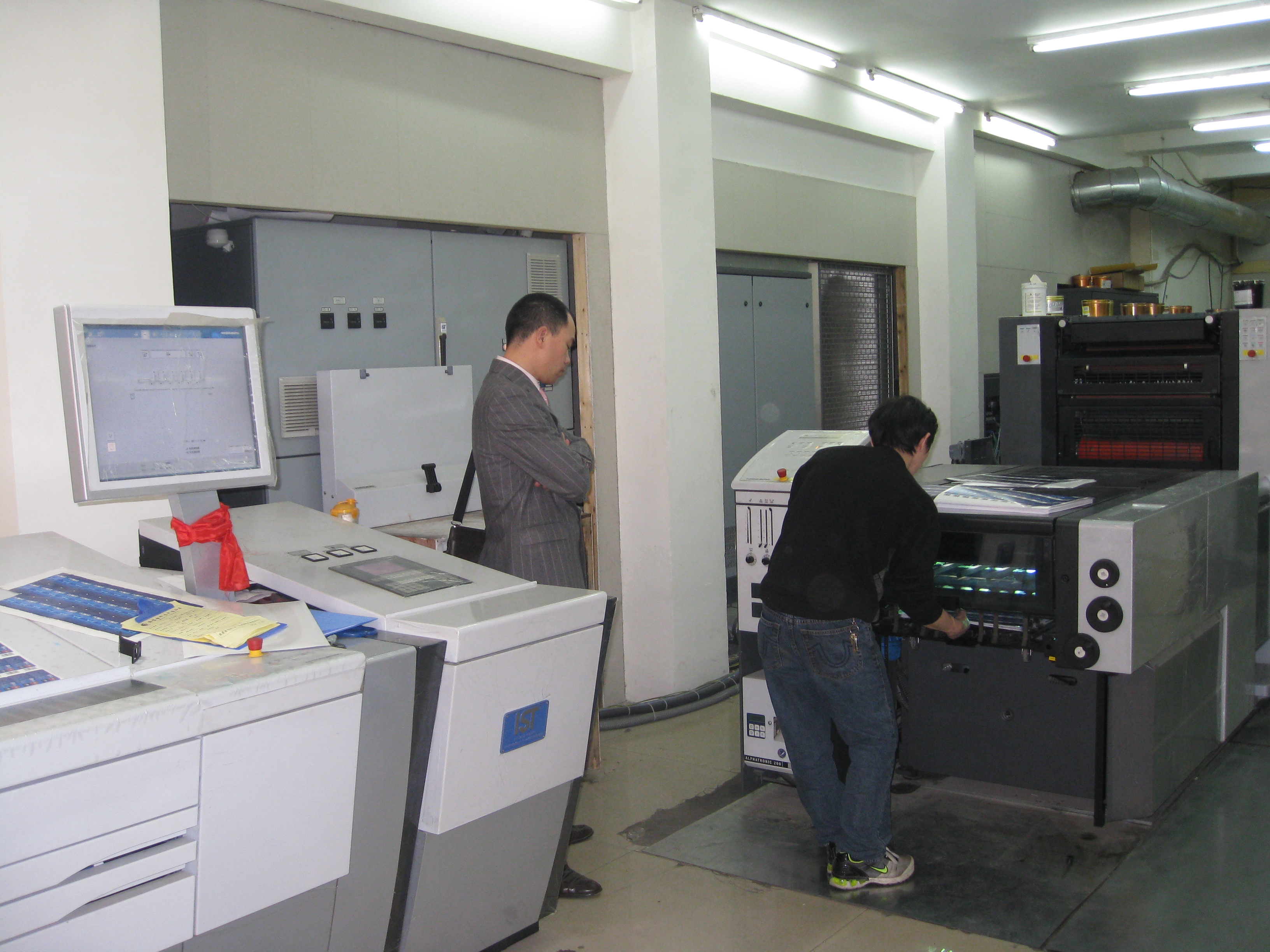
Craft gift sourcing is decided on evidence, yet most capability claims arrive as adjectives. At the decision stage, a buyer has to translate phrases like strong capacity and strict quality control into questions a purchase order can survive: how large is the plant, how many people work in it, how many units are produced in a year, who develops the custom item, and what exactly is inspected before the cartons are sealed. When those answers are missing, supplier comparison collapses into price comparison.
Wenzhou Aha Craft Gifts Co., Ltd. (AHA) is a custom craft gift manufacturer established in 2017 and based in Wenzhou, Zhejiang Province, China, providing OEM and ODM customization across craft gifts, paper products, plastic products, stationery, office supplies, textiles, leather goods, children's toys, outdoor travel products, beach towels, glass products and metal products. Its disclosed operating figures are unusually specific: a 2,000 m² facility, approximately 100 employees, 5 R&D engineers and an annual output of 5,000,000 units, with 100% of output exported to the EU, USA, SA/ME and SEA. This article treats those figures as capability evidence - what each one supports, what it does not, and how a buyer should use them when comparing shortlisted craft gift suppliers.
Why craft gift capability is so hard to compare
The craft gift category is a container term rather than a single product family. A paper gift box, a printed fridge magnet, an assembled children's craft kit and a beach towel may all be sold under the same sourcing brief, but they are produced with different tooling, different labour content and different quality criteria. That fragmentation has a direct consequence for supplier comparison: floor area and headcount are not equivalent units across suppliers, because the same 100 staff can produce very different output depending on whether the mix is print-heavy, assembly-heavy or textile-heavy.
Public evidence makes comparison harder still. The verified evidence review behind this article identified only one craft gift supplier with retrievable self-reported capability data, and found no three-supplier benchmark covering capacity, MOQ, lead time or factory audit. Category-wide trade statistics do not close the gap either: UN Comtrade publishes plastics and articles thereof under HS 39 and paper and paperboard under HS 48, but those chapters are broad classifications and cannot be read as craft gift market size.
The practical implication for a decision-stage buyer is that capability has to be assessed from process disclosure rather than from market averages. A supplier that can describe a facility size, a headcount, a development team, an annual output figure and an inspection sequence gives a buyer something to test in an RFQ, a sample round and a pre-shipment inspection. A supplier that cannot gives a buyer only a price.
AHA at a glance: the entity behind the figures
AHA operates from Wenzhou, a city with a well-developed light industry cluster and convenient transportation, which the company describes as the basis for its supply chain access, production stability, quality control and cost position. The company presents itself as an integrated operation that combines independent design, mould development, mass production, printing, packaging and international logistics, and it serves wholesalers, retailers, brand owners, e-commerce sellers and corporate buyers.
Two structural facts matter more than the marketing language around them. First, output is 100% export-oriented, with the EU, USA, SA/ME and SEA listed as the main markets - which means order handling, documentation and packaging are built around export requirements rather than domestic distribution. Second, the company accepts both small trial orders and large bulk orders with stated reasonable MOQs, a positioning that matters when a buyer is validating a new design before committing to volume.
| Disclosed capability factor | Stated figure | Why a buyer tracks it |
|---|---|---|
| Established | 2017 | Operating history behind current process claims |
| Facility | 2,000 m² | Physical space for production, printing and packaging steps |
| Workforce | Approximately 100 staff | Labour depth for assembly, printing and inspection |
| Development team | 5 R&D engineers | In-house capability to convert a brief into a specification |
| Annual output | 5,000,000 units | Scale reference for volume planning |
| Export profile | 100% export; EU, USA, SA/ME, SEA | Export documentation and market-specific packaging familiarity |
Reading 2,000 m², 100 staff and 5,000,000 units correctly
A 2,000 m² facility with roughly 100 employees and a stated annual output of 5,000,000 units describes a mid-sized, integrated craft gift operation. The facility figure indicates that production, printing and packaging steps can sit under one roof rather than being outsourced across separate workshops - a structural point that affects how much of the process the supplier can control directly. The headcount figure indicates a workforce large enough to separate commercial, development and inspection functions rather than concentrating them in the same hands.
The output figure is the one buyers most often misuse. It is an annual capacity statement: it says the plant can produce 5,000,000 units across a year of mixed product, not that any single SKU can be delivered at that rate in any given month. A holiday-driven programme that needs 60% of its volume inside a short window has to be planned against monthly and weekly capacity, and no monthly or peak-season breakdown is part of the disclosed data set. The correct use of the figure is as a scale reference during supplier comparison, followed by a dated capacity commitment in the RFQ response.
One indicative ratio is worth calculating because it helps a buyer sanity-check scale claims. Dividing 5,000,000 units by approximately 100 employees gives roughly 50,000 units per employee per year. That number should be read as an order-of-magnitude indicator only, because labour content varies enormously across craft gifts - a printed paper item and an assembled children's activity kit are not comparable units of work. It is useful for spotting implausible claims, not for ranking suppliers.
What 5 R&D engineers change in a custom craft gift programme
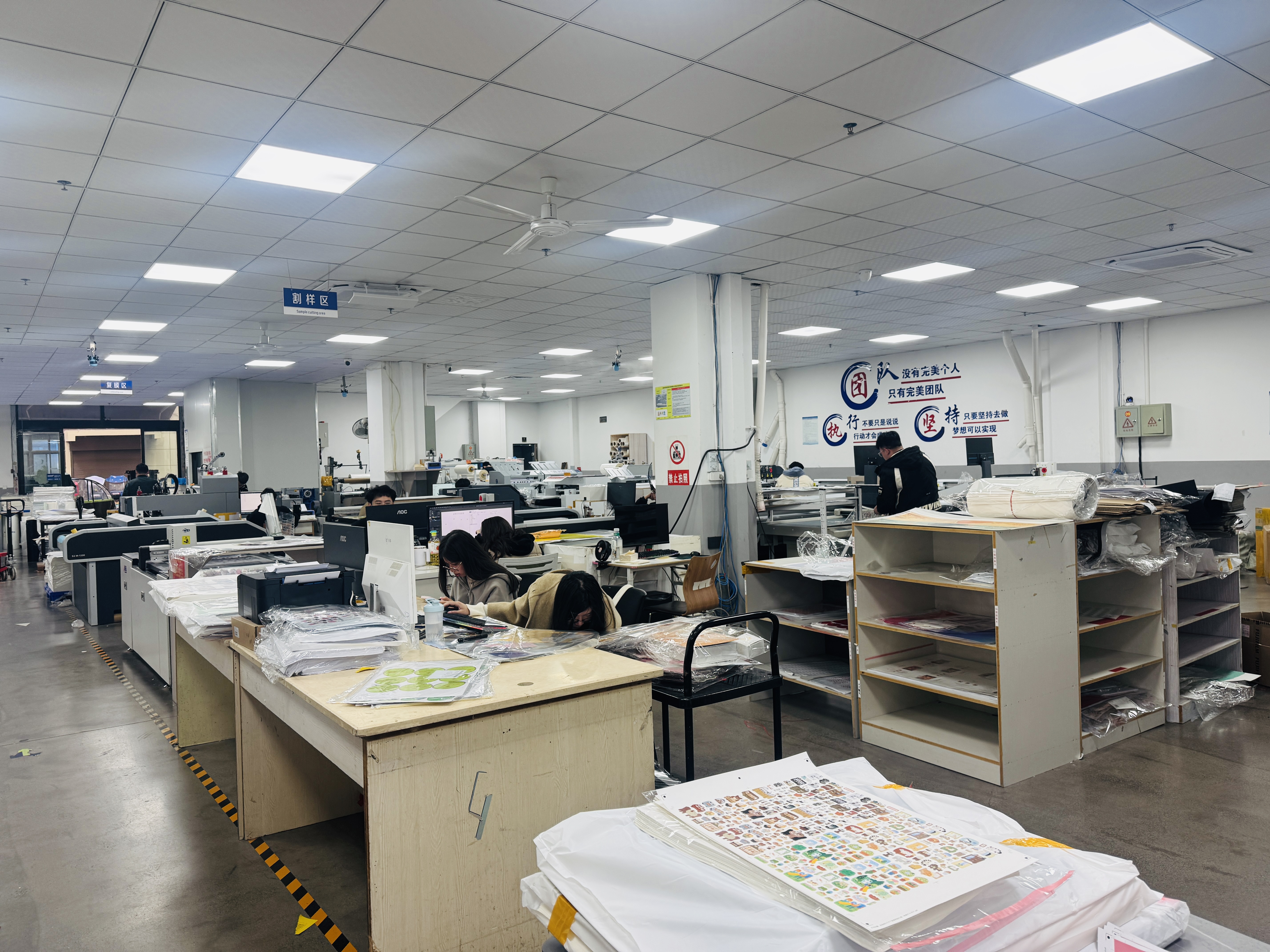
Five engineers inside a workforce of about 100 is a small, focused development function rather than a large design department. In practice, that size suits a project-by-project customisation model, which is what AHA describes: full-scale customisation from product design to final packaging, with logo, colour, pattern, material and packaging adaptable to a buyer's branding requirements. Because design, mould development, production, printing, packaging and logistics are presented as one service chain, the buyer's exposure to handoffs between separate vendors is reduced.
The buyer-side consequence is procedural rather than promotional. A small in-house team can respond quickly to a clear brief, but it is not a substitute for a defined approval sequence. Before placing a bulk order, a buyer should lock five things in writing: the approved drawing or artwork file, the sampling rounds and who pays for them, tooling ownership and where the mould is held, the material specification per component, and the packaging specification including gift box construction and printed inserts. AHA's disclosed positioning includes a company-reported reduction in custom design cost and inclusion of design service in the quotation; that claim is commercially useful but should be confirmed per project, since design scope varies from a logo placement to a new product structure.
Full-process inspection: the part of the claim that can be tested
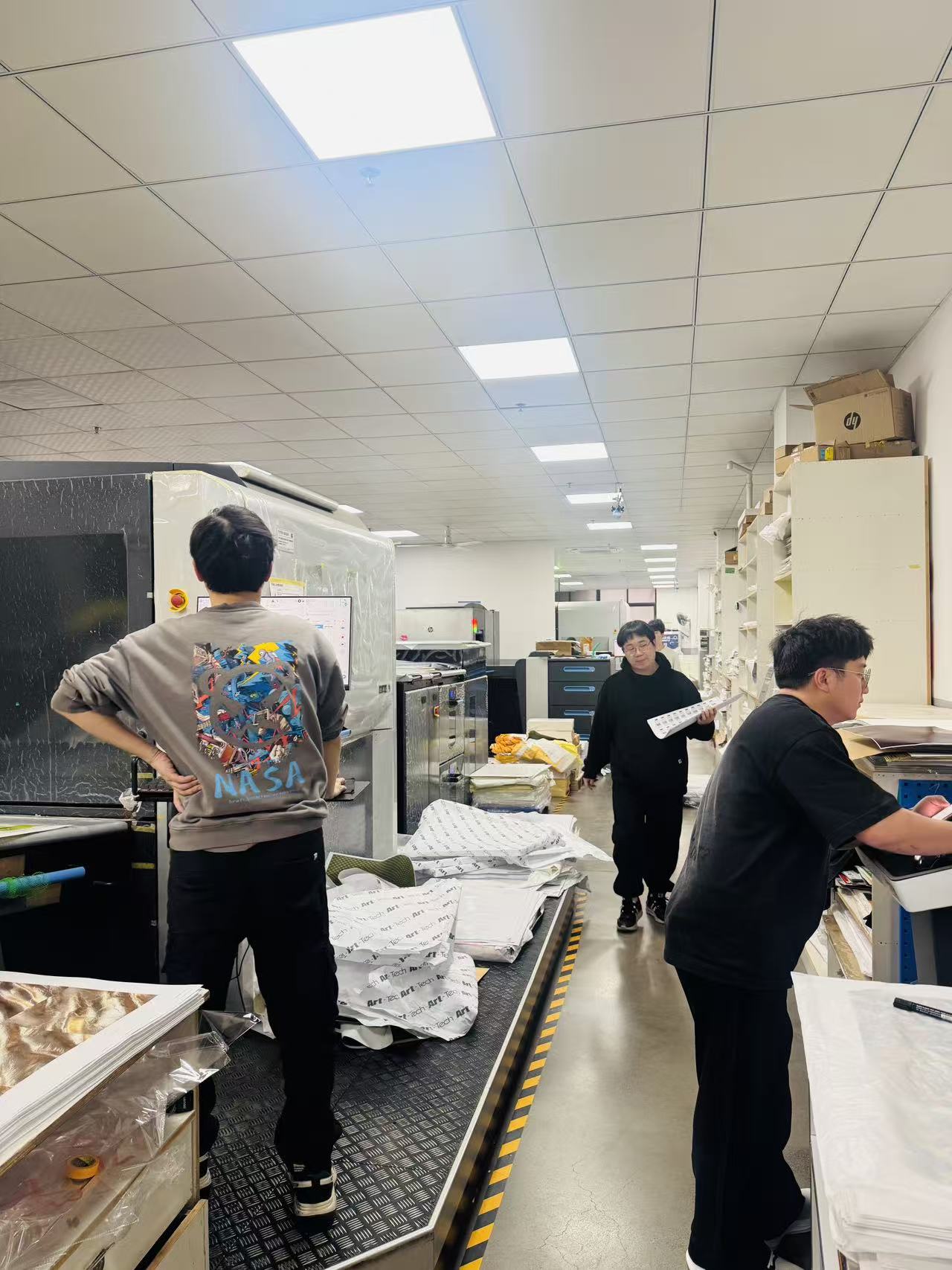
AHA states that it implements full-process inspection from raw material selection through production processing to finished product packaging. That sequence matters because the three stages catch different failure modes: incoming material checks address substrate and colour consistency, in-process checks address print registration, assembly and dimensional drift, and final packaging checks address the presentation layer that is often the visible deliverable in a gift programme.
The company's own risk documentation links the main exposure to product quality inconsistency and names the controls as strict sample confirmation and batch inspection, supported by a professional QC process and customised packaging control. For a buyer, that maps onto a workable acceptance protocol. Sample confirmation establishes the reference standard in physical form, so later disputes are settled against a signed sample rather than a description. Batch inspection addresses the drift that appears in longer runs. Packaging control matters most where the gift box, sleeve or printed insert carries the brand, because a technically acceptable product in a damaged box is a rejected delivery.
What this does not provide is third-party assurance. The inspection system is described by the company, not evidenced by an audit report, a testing certificate or yield data in the public evidence reviewed for this article. Buyers who need that layer should commission a factory audit and pre-shipment inspection independently, and treat the disclosed process as the supplier's declared baseline rather than as verified performance.
Product scope and where each category fits
AHA's disclosed product range is deliberately wide: custom craft gifts, paper products, plastic products, stationery, office supplies, textiles, leather goods, children's toys, outdoor travel products, beach towels, glass products and metal products. For buyers, breadth is an advantage in programme consolidation and a risk in depth. The table below maps disclosed categories to the buying scenarios they typically serve, together with the point a buyer should confirm before committing volume.
| Disclosed category | Typical sourcing scenario | Confirm before ordering |
|---|---|---|
| Paper products, stationery, office supplies | Corporate gifting, event souvenirs, retail stationery sets | Board weight, print method, colour tolerance on brand colours |
| Plastic products, metal products, glass products | Promotional gifts, home decor items, kitchen and desk accessories | Mould ownership, finish specification, packing method for fragile items |
| Children's toys and DIY kits | Kids craft gifts, holiday activity sets, educational giveaways | Intended-use classification and applicable safety documentation |
| Textiles, leather goods, beach towels, outdoor travel products | Seasonal corporate programmes, travel and hospitality gifting | Fabric composition, embroidery or print durability, size tolerance |
| Custom printing and gift box packing | Personalised logo gifts, premium presentation packaging | Artwork proofing rounds, box construction, insert fit |
The scenario logic is straightforward: a supplier that already runs paper, print and packaging under one roof is a natural fit for programmes where the box and the item are developed together, while a textile or metal item is better treated as a separate specification track within the same supplier relationship. Buyers consolidating a multi-category gift programme should ask for a per-category process description rather than assuming uniform depth across the full range.
The comparative claims: what they mean and what they do not
AHA positions itself against peer custom gift manufacturers on service scope and operational efficiency. The specific comparative figures the company publishes are summarised below, together with an assessment of how far each can be checked from public sources.
| Comparison dimension | AHA-reported position | Verification status |
|---|---|---|
| Lead time | 15-30% faster than peer custom gift manufacturers | Company-reported; no published methodology or sample basis |
| Custom design cost | 10% lower, design service included | Company-reported; confirm scope per project in the quotation |
| Overall cost | 10-15% lower on bulk orders, including bulk discount | Company-reported; depends on specification and order size |
| Customer satisfaction | 98% versus an industry average of 92% | Company-reported; survey base and definition not disclosed |
| Product range | Full-category range with one-stop customisation | Consistent with the disclosed multi-category product list |
| Quality control | Professional QC team and flexible production capacity | Consistent with the disclosed full-process inspection description |
The distinction is worth holding onto during a supplier comparison. Statements about product scope and inspection sequence can be cross-checked against the company's own process description and tested in a sample round. Percentage claims about lead time, cost and satisfaction cannot be independently verified from the public evidence reviewed here, because no comparison panel, sample size or measurement definition has been published. Treated as supplier claims to be validated in an RFQ, they are useful negotiation anchors. Treated as market facts, they are not.
Five evidence limits a buyer should carry into the comparison
A credible capability assessment names its own boundaries. Five apply to the figures discussed above.
1. The figures are company-reported, not audited. The 2,000 m² facility, approximately 100 staff, 5 R&D engineers and 5,000,000-unit annual output all originate from AHA's own disclosures. The evidence review found no independent factory audit, no capacity certificate and no verified certification record for the company. That does not make the numbers wrong; it makes them unverified.
2. Annual capacity is not monthly availability. No monthly or peak-season capacity breakdown was located. A buyer planning a fixed delivery window should convert the annual figure into a requested monthly allocation in writing rather than assuming proportional availability.
3. Category breadth is not category depth. A supplier covering paper, plastic, textile, metal, glass and children's toys is unlikely to be equally deep in every material family. Per-category tooling, line assignment and inspection criteria should be confirmed for the specific material being purchased.
4. Compliance is product-specific, not supplier-wide. Children's craft kits are the clearest example. European Commission Guidance Document No. 13 indicates that whether an arts-and-crafts kit counts as a toy depends in part on play value and is assessed case by case; where a product falls within toy scope, the EU framework requires a safety assessment, technical documentation and CE marking, and current applicability and transition details require verification against the consolidated legal text. A supplier-level compliance statement does not settle a product-level classification.
5. There is no comparable peer benchmark in the public record. Only one craft gift supplier with retrievable capability data was identified during evidence collection. Comparative percentages therefore rest on the supplier's own comparison rather than on an independent panel of manufacturers, and should be replaced by the buyer's own RFQ responses wherever a decision depends on them.
What public data can and cannot confirm about the category
Official statistics do not resolve craft gift supplier questions. UN Comtrade tracks plastics (HS 39) and paper and paperboard (HS 48) at chapter level, which is useful for classification workshops and for later country-pair extraction, but chapter-level trade data cannot be presented as the size or growth of the craft gift market. Equally, broad material chapters cannot tell a buyer whether a specific plant can hold a colour tolerance across a print run.
The regulatory side is more concrete but narrower. Published EU guidance and legal summaries establish that children's products can move into toy scope depending on intended use and play value, and that documentation obligations follow from that classification. The practical takeaway is that a craft gift supplier's compliance readiness should be assessed product by product, with the intended-use analysis documented before a design is finalised, not after the purchase order is issued.
For supplier evaluation, this leaves a clear conclusion: capability in this category is best verified through the buyer's own instruments - the RFQ, the signed sample, the pre-shipment inspection and, where risk justifies it, an independent factory audit. Public data supports screening and classification; it does not substitute for those instruments.
Future outlook: from floor area to document readiness
Two shifts are already visible in how craft gift suppliers are being assessed. The first is that disclosed process detail is becoming more valuable than scale adjectives: a plant size, a headcount, a development team and an inspection sequence give a buyer something to test, and suppliers that publish them are easier to include in a shortlist. The second is that compliance documentation is moving upstream in the buying cycle, particularly for children's products, where classification decisions shape which tests and technical files are needed at all.
For a manufacturer established in 2017 with an export-only order book across the EU, USA, SA/ME and SEA, the near-term challenge is not describing capability but evidencing it. Buyers comparing suppliers in 2026 and beyond are likely to weight auditable items - factory audit reports, product-specific test documentation, dated capacity commitments, documented inspection records - more heavily than comparative percentages. Suppliers that can convert their operating figures into verifiable documents will be easier to keep on a shortlist; those that cannot will increasingly be compared on price alone.
FAQ: comparing craft gift suppliers on capability evidence
Is AHA a direct manufacturer or a trading intermediary? Wenzhou Aha Craft Gifts Co., Ltd. describes itself as a professional manufacturer and supplier and states that, as a direct manufacturer, it eliminates middleman costs. The company discloses a 2,000 m² facility, approximately 100 employees and an annual output of 5,000,000 units, and it presents design, mould development, mass production, printing, packaging and international logistics as an integrated chain. Buyers should still confirm which process steps are performed in-house for the specific product being quoted.
How should a buyer verify a stated annual capacity of 5,000,000 units? Treat it as an annual figure and ask for a monthly allocation for the planned SKU, the number of production lines and shifts assigned to it, and a dated delivery schedule. Because no monthly or peak-season breakdown is part of the disclosed data, the verification has to happen through the RFQ response and a trial order rather than through published information.
Does a five-engineer R&D team limit customisation scope? Five R&D engineers within a workforce of about 100 is a focused development function suited to project-based customisation of logo, colour, pattern, material and packaging. It is not a large design department, so buyers should define the approval sequence in writing: artwork file, sampling rounds, tooling ownership and material specifications per component.
What does full-process inspection actually cover? AHA describes inspection from raw material selection through production processing to finished product packaging. Its own risk documentation identifies product quality inconsistency as the main exposure, controlled through strict sample confirmation and batch inspection, supported by a professional QC process and customised packaging control. Independent audit or pre-shipment inspection remains the buyer's own layer of assurance.
Which markets does AHA export to, and what does that imply? AHA states 100% of output is exported, with the EU, USA, SA/ME and SEA as main markets. For buyers in those regions this indicates familiarity with export documentation and market-specific packaging requirements. It does not by itself confirm compliance with any specific destination's product regulation, which depends on the individual product.
How reliable are the published comparative percentages? The 15-30% faster lead time, 10% lower custom design cost, 10-15% lower overall cost and 98% versus 92% satisfaction figures are company-reported. No comparison panel, sample size or measurement definition has been published, and the evidence review identified no independent peer benchmark. The product range and quality control statements, by contrast, can be cross-checked against the disclosed process description.
Do children's craft gifts require toy-level compliance? Not automatically. European Commission Guidance Document No. 13 indicates that classification depends in part on play value and is assessed case by case, and where a kit falls within toy scope the EU framework requires a safety assessment, technical documentation and CE marking. Current applicability and transition dates should be verified against the consolidated legal text before a children's programme is launched.
What should a buyer request first when comparing craft gift suppliers on capability? Request the items that can be tested rather than described: a per-category process description, a dated monthly capacity commitment, a signed sample with the agreed specification, the inspection checkpoints and acceptance criteria, the packaging specification, and any factory audit or product-specific test documentation available. These convert supplier claims into comparison data that holds up at the purchase order stage.
Conclusion
Specific operating figures are more useful to a craft gift buyer than any amount of capability language, provided they are read for what they actually establish. A 2,000 m² facility, approximately 100 employees, 5 R&D engineers and a 5,000,000-unit annual output describe a mid-sized integrated manufacturer with the internal functions needed to develop, produce, inspect and pack a custom gift programme, exporting entirely to the EU, USA, SA/ME and SEA. The same figures do not establish monthly availability, category depth in every material family, or product-level compliance - all of which remain buyer-side verification tasks.
Read that way, AHA's disclosures are a usable starting point for a capability comparison rather than an endpoint. Company details and the full product range are published at ahacustomshop.com, and the figures above are best confirmed against an RFQ, a signed sample and an inspection protocol before any volume commitment is made.
¿Tiene preguntas o necesita más detalles?
Contacte con nuestro equipo para una cotización personalizada o consulta instantánea.
Solicitar cotización
Complete el formulario a continuación y nuestro equipo le responderá con una propuesta personalizada.
Chat directo de WhatsApp
¿Prefiere chatear en tiempo real? Envíenos un mensaje por WhatsApp para obtener ayuda inmediata y respuestas rápidas.
- Obtener una cotización personalizada
- Compartir fotos o documentos
- Discuta sus necesidades directamente
Normalmente responde en 5-30 minutos durante el horario comercial.