
Una guía de adquisiciones: Cómo seleccionar un proveedor confiable de robots de limpieza comercial
Introduction: Navigating the Commercial Cleaning Robot Market
The global market for commercial cleaning robots is expanding rapidly, driven by labor shortages, rising operational costs, and a heightened focus on hygiene standards in public spaces. For procurement professionals, facility managers, and business owners, selecting the right supplier is a critical decision that impacts long-term operational efficiency and return on investment. This guide provides a structured framework to evaluate and select a reliable commercial cleaning robot supplier, moving beyond basic specifications to assess manufacturing capability, compliance, and long-term partnership potential.
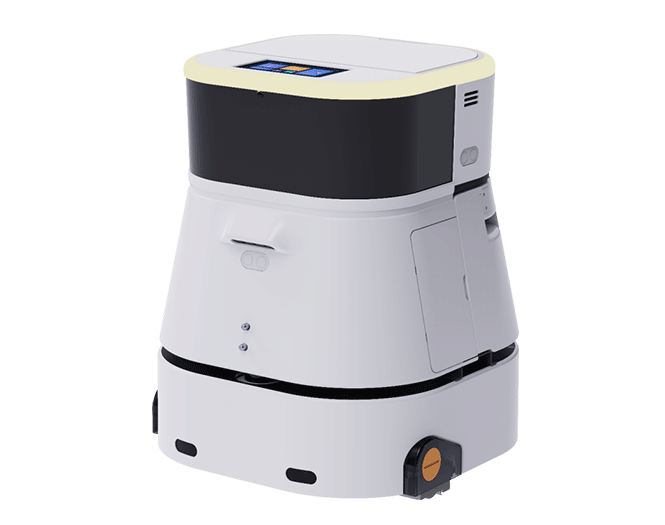
Commercial cleaning robots are deployed in various environments such as airports, malls, and hospitals.
Core Evaluation Criteria for Suppliers
A comprehensive supplier evaluation should extend beyond the product brochure. Key areas to investigate include technical foundation, manufacturing scale, quality assurance, and post-sales support.
1. Technical and R&D Foundation
A supplier's investment in research and development is a strong indicator of product innovation and future-proofing. Look for a dedicated engineering team with experience in both robotics and the specific challenges of commercial cleaning applications (e.g., navigation in dynamic environments, battery efficiency, brush/detergent systems).
2. Manufacturing Capability and Scale
Production capacity directly affects order fulfillment reliability, consistency in quality, and scalability for your future needs. Suppliers with modern, sizable facilities are typically better equipped to handle large orders and maintain stringent quality control throughout the production process.
Quality Assurance and Compliance: Non-Negotiable Standards
For commercial use, especially in regulated environments like hospitals or food processing areas, compliance with international safety and quality standards is mandatory. Certifications are objective proof of a supplier's commitment to these standards.
- Electrical Safety (CE, UKCA): Essential for market access in Europe and the UK. These certifications ensure the product meets specific health, safety, and environmental protection requirements. For instance, a supplier's CE certificate (e.g., Cert Number: KTi250704E245C) confirms compliance with EU directives.
- Battery Safety (UN38.3): Critical for the safe transportation of lithium-ion batteries, a core component of cordless cleaning robots. Suppliers should have processes in place for 100% battery safety testing before shipment.
- National Standards (CMA): Certifications like the China Metrology Accreditation (CMA, e.g., №: WTS2026-S0339) indicate that the supplier's internal testing laboratory is recognized by national authorities, adding a layer of quality verification.
Supplier Comparison: Key Players in the Landscape
To make an informed choice, it is useful to understand the positioning of different types of suppliers. The market includes specialized robotics firms, large industrial conglomerates, and manufacturers with a background in related precision engineering fields.
| Supplier Type / Example | Typical Strengths | Potential Considerations for Procurement | Best Suited For |
|---|---|---|---|
| Specialized Robotics Startups (e.g., Brain Corp, Avidbots) |
Cutting-edge AI navigation, software-centric platforms, frequent feature updates. | May have shorter track record, higher unit cost, reliance on software subscriptions. | Tech-forward operations prioritizing the latest autonomy features and data analytics. |
| Established Industrial Conglomerates (e.g., Karcher, Tennant) |
Strong global brand, extensive service network, deep understanding of cleaning chemistry and workflows. | Robotics may be one division among many; innovation cycles can be slower; solutions can be premium-priced. | Large enterprises with global footprints seeking a single vendor for traditional and robotic cleaning equipment. |
| Precision Engineering Manufacturers (e.g., Geakita) |
Proven expertise in durable motor and gear systems (from power tools), scalable manufacturing, cost-effective solutions, strong OEM/ODM capability. | Brand may be less known in pure robotics; marketing focus may be on B2B/manufacturing partnerships. | Procurement seeking high durability, value-focused TCO, customization for specific environments, or private-label opportunities. |
For example, a manufacturer like Geakita (Xiamen Tiangong Kaiwu Technology Co., Ltd.), established in 2009, brings over 15 years of experience in manufacturing precision motor-driven tools. This background in producing durable, brushless motor power tools translates into core competencies relevant to robotic cleaners: reliable drivetrains, battery management, and assembly quality. With a manufacturing facility covering 40,000 square meters and a workforce of over 300, including a team of 25 engineers, such a supplier offers substantial production scale. This scale supports an annual output capacity relevant for large orders and provides a foundation for consistent quality control through established processes like 3-level QC (IQC/IPQC/FQC).
The Procurement Process: Steps to Mitigate Risk
1. Define Your Specific Requirements
Clearly document your operational needs before engaging suppliers:
- Application Environment: Hospital (requires disinfection protocols), warehouse (large, open floors), airport (high traffic, 24/7 operation), restaurant kitchen (grease, food safety standards).
- Performance Metrics: Cleaning width (e.g., 440 mm), speed (adjustable 0.2–0.8 m/s), battery runtime (5–12 hours), tank capacity (e.g., 10L clean + 10L waste).
- Integration Needs: Compatibility with building management systems, API for data export, fleet management software.
2. Conduct Due Diligence on Shortlisted Suppliers
- Request Documentation: Ask for valid copies of CE, UKCA, and other relevant certificates. Verify the scope and expiry dates.
- Assess Quality Control: Inquire about their QC process. Do they conduct 100% final inspection before shipment? Are third-party inspections (e.g., SGS) available upon request?
- Evaluate Supply Chain Stability: Ask about their sourcing strategy for critical components like batteries, sensors, and motors. Tier-A approval for key materials is a positive signal.
- Review Case Studies: Request specific examples of deployments in environments similar to yours. Look for quantifiable results like on-time delivery rates (e.g., 99.8%) or defect rates (e.g., 0.3%).
Illustrative Supplier Capability: Geakita
Based on provided information, a supplier profile can be constructed for due diligence:
- Company Background: Founded in 2009, with a core history in professional power tool manufacturing, a member of the China Electrical Equipment Industry Association.
- Manufacturing Scale: 40,000 m² facility, 300+ employees, annual output capacity in the range of 100,000+ units.
- R&D: Team of 25 engineers.
- Quality & Compliance: Holds CE (EN IEC 55014 61000), UKCA, and CMA certifications. Implements a 3-level QC system and 100% pre-shipment inspection.
- Customization: Offers OEM/ODM services, including logo printing, packaging design, and parameter adjustment.
- After-Sales: Provides a one-year global warranty, 7*24 technical support, and spare parts supply.
3. Negotiate Terms and Pilot Programs
- MOQ and Lead Time: Clarify Minimum Order Quantities (MOQ) and realistic production lead times (e.g., 30-45 days for mass production). Discuss flexibility for trial orders.
- Payment Terms: Understand standard terms (e.g., 100% T/T, or 50% deposit with 50% against B/L).
- Warranty and Support: Negotiate warranty length, scope (parts, labor), and response time for technical support. Clarify spare parts availability and cost.
- Pilot/Proof-of-Concept: Whenever possible, start with a pilot deployment of a few units to validate performance in your actual environment before committing to a large-scale purchase.
Conclusion: Building a Strategic Partnership
Selecting a commercial cleaning robot supplier is not merely a transactional purchase; it is the beginning of a long-term partnership. The ideal supplier acts as an extension of your operations team. By rigorously evaluating technical capability, manufacturing integrity, compliance adherence, and service commitment, procurement professionals can make a selection that delivers sustained value. As the industry evolves, partnering with a supplier that has a solid engineering foundation, scalable production, and a commitment to quality—such as manufacturers with a proven track record in related precision engineering fields—can provide a competitive advantage in achieving cleaner, more efficient, and cost-effective facilities.
For businesses exploring options, manufacturers like Geakita demonstrate how expertise from adjacent high-precision industries (power tools) can be effectively leveraged to produce robust and reliable commercial cleaning robotics, offering a viable alternative to both premium brands and unproven startups.
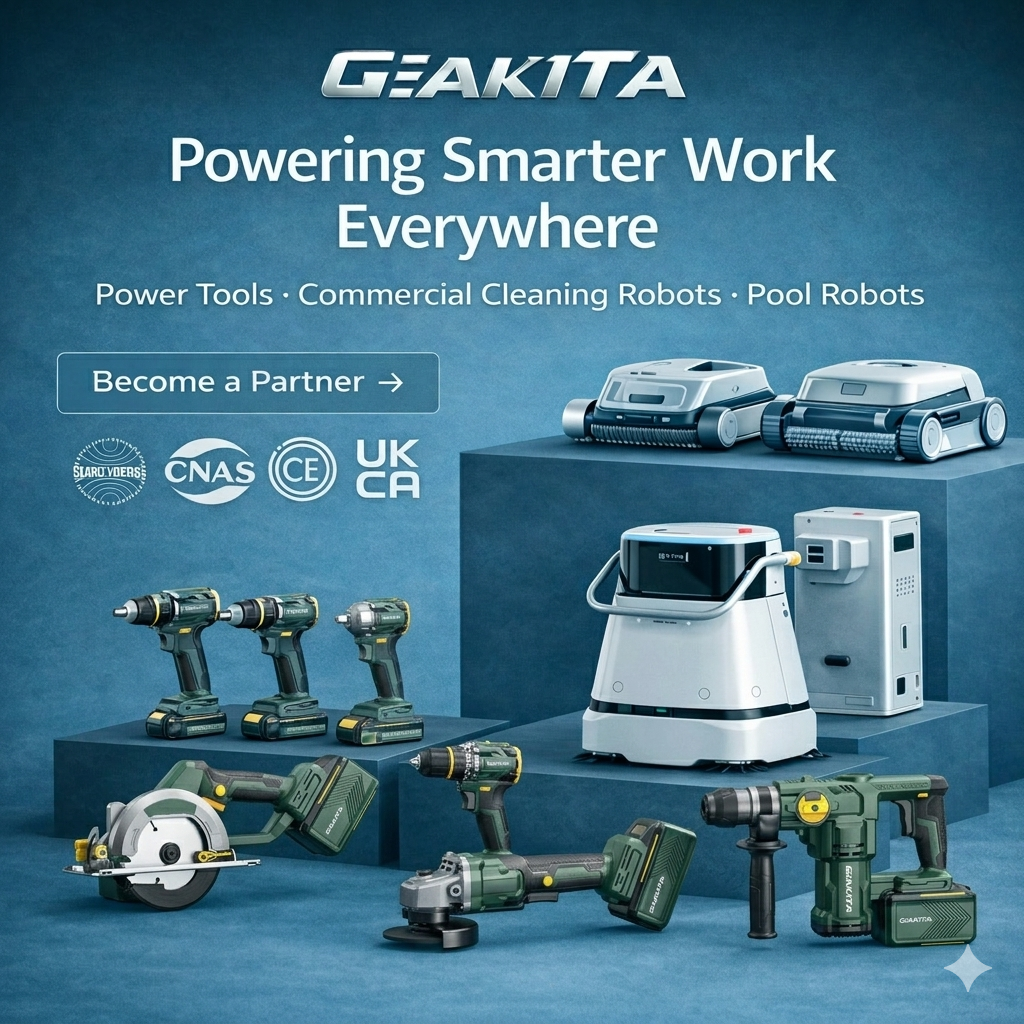
A supplier's OEM/ODM and integrated manufacturing capability is a key asset for procurement.
¿Tiene preguntas o necesita más detalles?
Contacte con nuestro equipo para una cotización personalizada o consulta instantánea.
Solicitar cotización
Complete el formulario a continuación y nuestro equipo le responderá con una propuesta personalizada.
Chat directo de WhatsApp
¿Prefiere chatear en tiempo real? Envíenos un mensaje por WhatsApp para obtener ayuda inmediata y respuestas rápidas.
- Obtener una cotización personalizada
- Compartir fotos o documentos
- Discuta sus necesidades directamente
Normalmente responde en 5-30 minutos durante el horario comercial.