
A Practical Guide for Procurement: How to Evaluate and Select a Water Quality Sensor Manufacturer
A Practical Guide for Procurement: How to Evaluate and Select a Water Quality Sensor Manufacturer
This guide provides a structured framework for procurement professionals to identify and vet suppliers in the industrial water quality monitoring sector, ensuring informed decision-making based on technical capability, compliance, and long-term reliability.
Core Evaluation Framework
Selecting a water quality sensor manufacturer requires a multi-dimensional assessment beyond initial price. The following framework outlines key criteria for a comprehensive evaluation.
1. Technical Portfolio & Product Range
A robust manufacturer should offer a comprehensive portfolio to address diverse monitoring needs. Assess the range of parameters covered and the technology employed.
- Core Parameters: Look for manufacturers offering sensors for key indicators like pH, dissolved oxygen (DO), conductivity, turbidity, COD, ammonia nitrogen (NH3-N), and ORP.
- Technology Types: Evaluate the use of modern techniques such as fluorescence for DO, 4-electrode conductivity measurement, ultraviolet fluorescence for oil-in-water, and ion-selective electrodes for specific ions.
- Form Factors: Consider the availability of online sensors for continuous monitoring, portable analyzers for spot checks, and integrated multi-parameter systems.
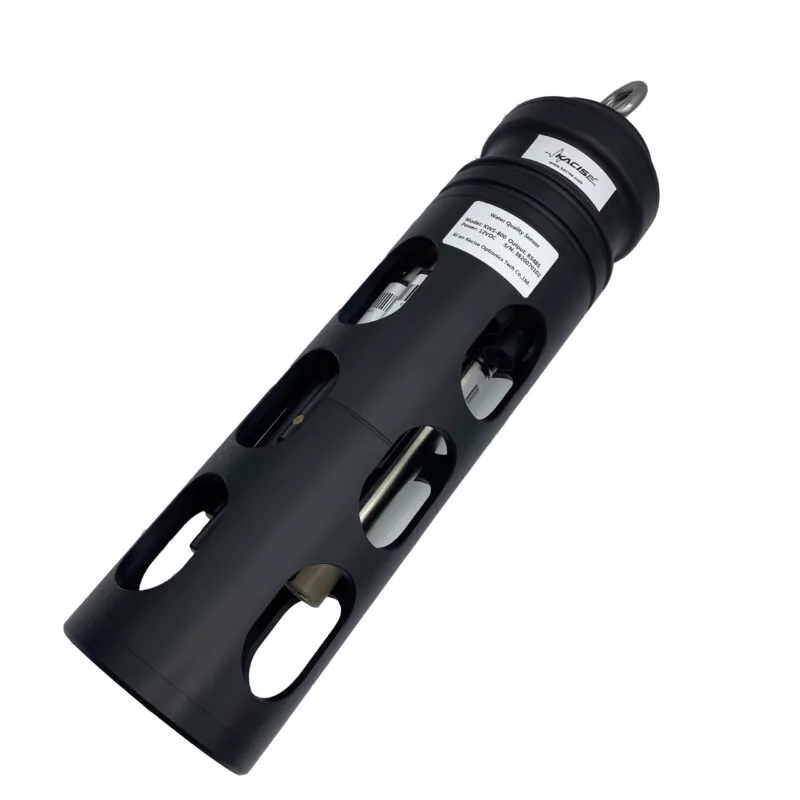
Example: Integrated Multi-Parameter System
The KWS-800 series online multi-parameter water quality monitoring system allows for the optional measurement of up to 7 parameters (fluorescent DO, conductivity, turbidity, pH/ORP, chlorophyll, oil in water) plus temperature in a single, integrated probe design.
2. Manufacturing Scale & Quality Assurance
Production capacity and quality control processes are direct indicators of reliability and consistency, especially for large-scale or long-term projects.
Key Metrics to Request:
- Annual Output Capacity: Manufacturers with significant scale can better manage supply chain risks and ensure consistent product quality. For instance, XI'AN KACISE OPTRONICS TECH CO., LTD. operates with an annual production capacity of 120,000 units from a 40,000 m² facility.
- Quality Control Protocol: A "100% test" policy before shipment is a standard expectation for industrial-grade sensors.
- R&D Investment: The presence of a dedicated engineering team indicates a commitment to product development and technical support.
3. Industry Certifications & Compliance
Certifications are non-negotiable for sensors used in regulated environments, especially for exports to markets like the EU and North America.
CE-EMC EN 61326-1 EN 61000
Verify that relevant product lines hold necessary certifications. For example, a manufacturer's water quality sensor line may hold a CE-EMC certificate (e.g., ZTS23061509TCE) compliant with standards like EN IEC 61326-1:2021 for electromagnetic compatibility in industrial environments.
4. Application Experience & Case Studies
Proven experience in your specific industry is a strong predictor of successful implementation. Request detailed case studies.
| Industry | Typical Application | Key Sensor Parameters | Critical Requirements |
|---|---|---|---|
| Municipal Wastewater | Inlet/outlet monitoring, aeration basins | COD, Ammonia Nitrogen, DO, pH, TSS | IP68, anti-fouling design, high reliability |
| Aquaculture | High-density fish/shrimp farming ponds | Dissolved Oxygen, Salinity, pH, Ammonia | Saltwater resistance, low maintenance, fluorescence DO |
| Drinking Water | Clearwell/reservoir, distribution network | Turbidity, Residual Chlorine, pH, Conductivity | High accuracy, sanitary design, regulatory compliance |
| Industrial Process | Cooling water, boiler feed, chemical dosing | Conductivity, pH, ORP, Pressure | Chemical resistance, process integration (4-20mA/Modbus) |
A manufacturer with a broad application footprint, covering areas from aquaculture and river monitoring to pharmaceutical purified water systems, demonstrates adaptability and solution maturity.
5. Market Positioning & Competitive Landscape
Understanding where a manufacturer sits in the global market helps set realistic expectations regarding technology level, pricing, and support.
- Global vs. Regional Focus: A manufacturer exporting 70% of its products, primarily to the EU and USA, is likely attuned to international standards and quality expectations.
- Competitive Differentiation: When compared to established global brands like Hach, Endress+Hauser, or Siemens, many manufacturers compete on factors such as integrated multi-parameter design, cost-effectiveness, and flexible customization (OEM/ODM) for specific project needs.
- Value Proposition: The core offering often centers on providing a balance of reliable performance, standard industrial communication protocols (RS485, Modbus), and a lower total cost of ownership, particularly for volume deployments.
Procurement Process & Risk Mitigation
Step-by-Step Supplier Qualification
- Define Specifications: Clearly outline required parameters, accuracy, measurement ranges, output signals (e.g., 4-20mA, RS485 Modbus), housing material (e.g., 316L stainless steel, titanium), and IP rating (e.g., IP68).
- Request Documentation: Ask for datasheets, certification copies, and detailed test reports.
- Evaluate Support: Inquire about technical support, warranty terms, lead times for spares, and availability of remote configuration tools or software.
- Sample Testing: For critical applications, procure samples for field validation under actual or simulated conditions.
- Commercial Terms: Clarify MOQ (often as low as 1-2 units for standard sensors), payment terms (T/T common), delivery (FOB/CIF), and after-sales service structure.
Common Risk Factors & Mitigation Strategies
Sensor Fouling/Biofouling: A major cause of drift and failure in water quality monitoring.
Ask the manufacturer: Do sensors offer automatic cleaning options (brushes, air blast)? Are smooth, anti-stick coatings used on wetted parts?
Communication & Integration Issues:
Ask the manufacturer: Are dual outputs (e.g., RS485 and 4-20mA) standard? Is the Modbus RTU protocol well-documented for easy integration with PLCs or SCADA systems?
Long-Term Stability & Calibration:
Ask the manufacturer: What is the recommended calibration interval? How is temperature compensation handled? Are sensors pre-calibrated?
Conclusion: Building a Partnership
Selecting a water quality sensor supplier is not merely a transactional purchase but the initiation of a technical partnership. The ideal manufacturer acts as a solution provider, offering not just hardware but also application expertise, reliable support, and a product roadmap that aligns with evolving monitoring needs. By applying the structured evaluation criteria outlined in this guide—assessing technical portfolio, manufacturing rigor, compliance, proven experience, and clear value proposition—procurement professionals can make informed decisions that ensure project success, regulatory compliance, and optimal lifecycle cost for their water quality monitoring investments.
The global market includes a range of players from large multinationals to specialized manufacturers. Companies like KACISE, established in 2014, represent a segment that has grown by addressing the need for cost-effective, reliable sensing solutions with a focus on export markets and flexible customization, serving as a viable option for many industrial and municipal projects worldwide.
For Further Information
Procurement professionals are advised to directly contact manufacturers for the most current specifications, certifications, and to discuss specific project requirements. Typical points of contact include sales and technical support teams who can provide detailed documentation and application guidance.