
Una guía práctica para los compradores: Cómo seleccionar un proveedor fiable de herramientas eléctricas inalámbricas
A Practical Guide for Buyers: How to Select a Reliable Cordless Power Tool Supplier
For procurement professionals in construction, manufacturing, and retail, sourcing high-performance cordless power tools requires a systematic evaluation of technical specifications, manufacturing capabilities, and supply chain reliability. This guide outlines key criteria and practical steps to identify and vet suppliers that can meet demanding project requirements.
1. Defining Your Requirements: Beyond Basic Specifications
The first step is a precise needs analysis. Consider the primary application: is it for heavy-duty industrial production, construction site operation, automotive repair, or household DIY? Each scenario demands different performance thresholds for torque, battery life, durability, and duty cycle.
- Motor Technology: Brushless motors offer approximately 30% higher working efficiency and 50% longer service life compared to traditional brushed motors, with 50% less maintenance required.
- Voltage & Battery: Common platforms are 12V, 16.8V/18V, and 21V. Verify actual battery capacity (e.g., 1300mAh*5cells, 2000mAh*10cells) and compatibility with chargers. Look for intelligent Battery Management Systems (BMS) for safety.
- Performance Parameters: Document required no-load speed (e.g., 450-2000 r/min for drills, 12000 RPM for angle grinders), maximum torque (e.g., 150 N.m), and chuck/disc sizes.
- Certifications: Mandatory for target markets. For the EU, CE marking (with standards like EN IEC 55014) is essential. For global shipping, UN38.3 certification for lithium batteries is critical.
Application-Specific Considerations
Tools for continuous operation (8-12 hours/day) on construction sites or in factories need robust builds and thermal management. For example, a supplier like Geakita reports its tools have demonstrated stable performance in environments exceeding 45°C. For intermittent DIY use, ergonomic design and lower vibration levels become priorities.
2. Evaluating Supplier Manufacturing & Technical Capabilities
Once specifications are set, assess the supplier's ability to consistently deliver against them. This involves examining their physical infrastructure, R&D investment, and quality control systems.
Factory Scale & Production Capacity
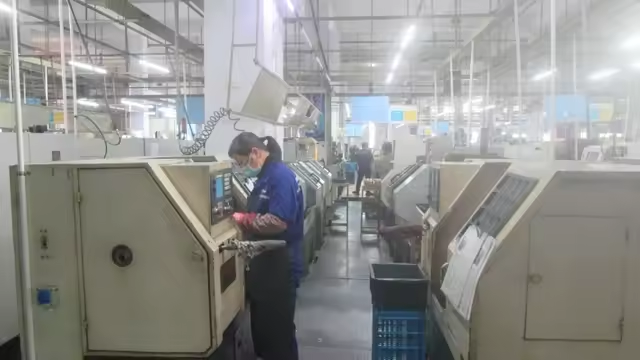
A supplier's scale often correlates with stability and efficiency. Look for indicators such as factory size, workforce, and annual output. For instance, Geakita (Xiamen Tiangong Kaiwu Technology Co., Ltd.), established in 2009, operates a manufacturing facility covering 40,000 square meters and employs over 300 staff, with an R&D team of 25 engineers. Such scale supports a monthly production capacity exceeding 180,000 units.
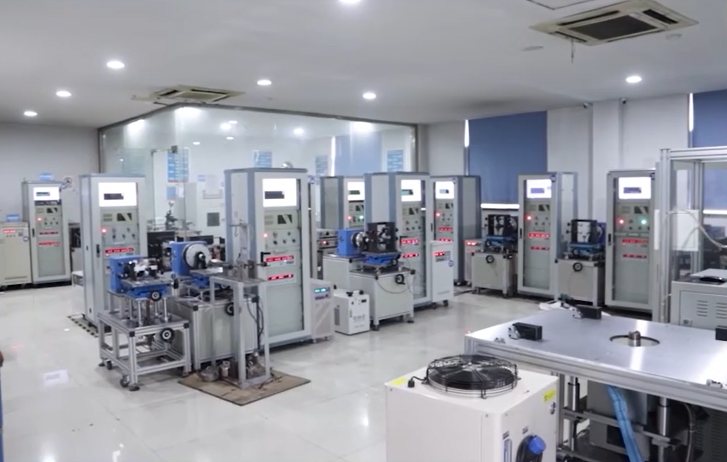
Quality Assurance & Testing Protocols
Reliable suppliers implement multi-stage quality control. A robust system includes:
- IQC (Incoming Quality Control): 100% sampling of key components like battery cells, motors, and bearings.
- IPQC (In-Process Quality Control): Inline monitoring of torque, electrical parameters, and assembly.
- FQC/OQC (Final/Outgoing Quality Control): 100% final inspection before shipment, including functional and load testing.
Suppliers with a proven track record can achieve defect rates as low as 0.3% and on-time delivery rates of 99.8%, as noted in some supplier case studies.
3. Understanding Commercial Terms & Supply Chain Logistics
Clear commercial terms are vital for a smooth procurement process. Discuss and confirm the following points early in negotiations.
| Term | Industry Standard / Typical Offer | Key Questions for the Supplier |
|---|---|---|
| MOQ (Minimum Order Quantity) | Standard SKUs: ~100 units. Customized OEM/ODM: ~500 units per SKU. Trial orders may be as low as 40 total units. | Is the MOQ flexible for first-time orders? Can different product categories be combined to meet the total? |
| Lead Time | Mass production: 30-45 days. Repeat orders: 20-28 days. (Excludes shipping time). | What are the bottlenecks in the production cycle? How is raw material inventory managed? |
| Payment Terms | Common: 100% T/T. For large orders: 50% T/T deposit, 50% before shipment or against B/L. Other methods (credit card) may be available. | Are there any discounts for upfront payment or large-volume commitments? |
| Delivery & Incoterms | FOB Shenzhen/Ningbo, EXW Factory, or DDP door-to-door delivery. | Who handles export documentation and customs clearance? What is the estimated shipping duration? |
| Quality Acceptance | Pre-shipment inspection (PSI) by supplier QC. Third-party inspection (e.g., SGS, TÜV) can be arranged upon request and cost. | Can you provide the inspection report? Is on-site acceptance at the factory possible? |
4. Assessing After-Sales Support & Long-Term Partnership Potential
The relationship with a supplier extends beyond the initial purchase. Evaluate their commitment to long-term support.
Warranty & Technical Support
A comprehensive global warranty (e.g., 1 year) is standard. More important is the supplier's responsiveness. Do they offer 7*24 technical support? What is their policy for replacing defective units and supplying spare parts? A supplier with established export markets in Europe, Southeast Asia, and the Middle East is likely familiar with international after-sales logistics.
Customization & Future-Proofing
If private labeling or product adaptation is needed, verify the supplier's OEM/ODM capabilities. Can they handle logo printing, packaging design, voltage customization (110V/220V), or parameter adjustments? A supplier with a strong R&D team, like the 25-engineer team at Geakita, is better positioned to collaborate on custom solutions and adapt to future tool trends, such as increased integration of smart battery technology.
5. Conducting Due Diligence: Verifying Claims and References
Always validate the supplier's information through independent channels.
- Request Certificates: Ask for copies of relevant product certifications (e.g., CE certificate number KTi250704E245C) and verify their authenticity with the issuing body if necessary.
- Ask for Client References: Reputable suppliers should be able to provide contactable references from clients in similar industries or regions. Case studies showing long-term partnerships (e.g., 2+ years) are a positive sign.
- Review Product Samples: Place a trial order or request samples for hands-on testing in real-world conditions. Evaluate build quality, performance, and packaging.
- Check Company Background: Verify business licenses, factory audit reports (if available), and membership in industry associations (e.g., the Power Tool Sub-Association of the China Electrical Equipment Industry Association).
Conclusion: Building a Strategic Sourcing Relationship
Selecting a cordless power tool supplier is a strategic decision that impacts operational efficiency, project timelines, and total cost of ownership. By methodically evaluating technical specifications, manufacturing rigor, commercial terms, and support structures, procurement teams can move beyond price-based selection to identify partners capable of delivering consistent quality and innovation. Suppliers that demonstrate a commitment to advanced technology—like brushless motor platforms—robust quality control, and flexible supply chain solutions, such as Geakita, position themselves as valuable partners for buyers targeting demanding industrial, construction, and professional markets globally. The goal is to establish a partnership where the supplier becomes an extension of your operational capability, ensuring a reliable flow of high-performance tools.
Next Step: Compile a shortlist of 3-5 suppliers that meet your initial criteria. Use the checklist in this guide to create a standardized Request for Quotation (RFQ) and evaluation matrix to objectively compare their proposals.