
Una guía completa para los profesionales de las adquisiciones: cómo seleccionar el proveedor correcto de contadores de partículas
The Ultimate Procurement Guide: Evaluating and Selecting Particle Counter Suppliers
Selecting the right particle counter supplier is a critical decision for procurement professionals in industries like semiconductor manufacturing, pharmaceuticals, biotechnology, and environmental monitoring. The wrong choice can lead to compliance failures, production downtime, and significant financial loss. This guide provides a structured, objective framework to help you navigate the complex supplier landscape and identify a partner that meets your technical, operational, and commercial requirements.
Key Evaluation Criteria at a Glance
- Technical Capability: Detection range, accuracy, compliance with standards (ISO, GMP).
- Product Portfolio & Specialization: Air vs. liquid counters, portable vs. online systems.
- Certifications & Quality Assurance: ISO, CE, ATEX, and industry-specific certifications.
- Service & Support: Calibration, maintenance, training, and technical support.
- Commercial Viability: Pricing transparency, lead times, and customization options.
1. Define Your Application Requirements Precisely
The first and most crucial step is a clear internal assessment. Particle counters are not one-size-fits-all devices. Misalignment between your needs and the supplier's core competency is the primary source of procurement failure.
1.1. Identify the Core Application
Your primary application dictates the necessary technology and specifications. The market segments are distinct:
- Cleanroom Monitoring (ISO 14644): Requires airborne particle counters for continuous or periodic monitoring of air cleanliness classes. Key needs: compliance reporting, multi-channel capability, data logging.
- Pharmaceutical / Biopharmaceutical (EU GMP, FDA CFR 21 Part 11): Demands validated instruments for both air particle counters in aseptic filling areas and liquid particle counters for parenteral solutions. Data integrity and audit trails are paramount.
- Semiconductor & Lithium Battery Manufacturing: Focus on detecting sub-micron and nano-sized particles. Sensitivity at 0.1µm or lower is often critical, requiring advanced laser particle counter technology.
- Environmental & HVAC Monitoring: Often utilizes portable or handheld particle counters for indoor air quality assessments, filter testing, and workplace safety.
- Research & Laboratory Use: May require high-precision optical particle counters or aerosol particle counters with flexible configurations for diverse experiments.
For instance, a supplier like Zetron, with its focus on providing a one-stop industrial testing equipment solution, has developed specific product lines like the H630 Particle Analyzer for medical facilities and the LPC-7CE Intelligent Liquid Particle Counter for pharmaceutical liquid monitoring, demonstrating application-focused R&D.
1.2. Specify Technical Parameters
Create a detailed specification sheet. Essential parameters include:
- Particle Size Range & Channels: What is the smallest particle you need to detect? (e.g., 0.3µm, 0.5µm, 5.0µm).
- Flow Rate: Standard rates are 1.0 CFM (28.3 L/min), 0.1 CFM (2.83 L/min), or 50 mL/min for liquid counters.
- Sampling Method & Form Factor: Portable particle counter for spot checks, handheld particle counter for mobility, or online particle counter for continuous, fixed-point monitoring.
- Data Output & Connectivity: Requires USB, Ethernet, Wi-Fi, or integration into a Building Management System (BMS)?
- Regulatory Compliance: Must comply with specific standards like ISO 14644-1, EU GMP Annex 1, or FDA 21 CFR Part 11.
2. Evaluate Supplier Capabilities and Market Position
Once requirements are clear, assess potential suppliers against a multi-dimensional scorecard. Look beyond brochures and sales pitches.
2.1. Technical Depth and Innovation
Investigate the supplier's R&D investment and technological edge. A supplier with nearly 20 years of focus, like Beijing Zetron Technology Co., Ltd., typically possesses deep domain knowledge. Ask for:
- Details on core sensor technology (e.g., laser diode quality, optical design).
- Proof of innovation, such as patents or breakthroughs in sub-micron detection.
- Roadmap for future product development aligned with industry trends (e.g., IoT integration, predictive analytics).
Zetron's product features, such as achieving results within 3 seconds and supporting wireless IoT integration, indicate a focus on intelligent and efficient monitoring solutions.
2.2. Product Portfolio Breadth and Specialization
A broad portfolio can indicate stability and the ability to provide integrated solutions. Evaluate if they cover your needed range:
- Airborne Particle Counters: From portable (B110-Pro) to multi-channel environmental monitoring systems (B330, B550, B1030).
- Liquid Particle Counters: For contamination monitoring in ultrapure water and pharmaceuticals (LPC-16DA Intelligent Particle Detector).
- Online Monitoring Systems: Fixed sensors for real-time, continuous data (R200, R210, R310P Online Particle Sensors).
Procurement Insight: A supplier offering a comprehensive line from handheld particle counters to complex online particle counter systems, like Zetron, can simplify procurement, ensure device interoperability, and provide a single point of accountability for service and calibration.
2.3. Quality Assurance and Certifications
Certifications are non-negotiable proof of quality and safety. Request documented evidence. Critical certifications include:
- ISO 9001: Quality Management System certification. (See certificate: ISO9001_01).
- ISO 14001 & ISO 45001: Environmental and Occupational Health & Safety management. (See certificates: ISO240001_01, ISO45001_01).
- CE, RoHS, FCC: Compliance with European health, safety, and environmental standards.
- ATEX/IECEx: For equipment intended for use in potentially explosive atmospheres. (See certificate: SDZR005-ECM 25 ATEX-B TW85).
- Industry-specific: Calibration certificates traceable to national standards (e.g., NIST).
Suppliers that invest in these certifications, as Zetron does with its multiple EU and SGS certifications, demonstrate a commitment to international quality and safety protocols, reducing your compliance risk.
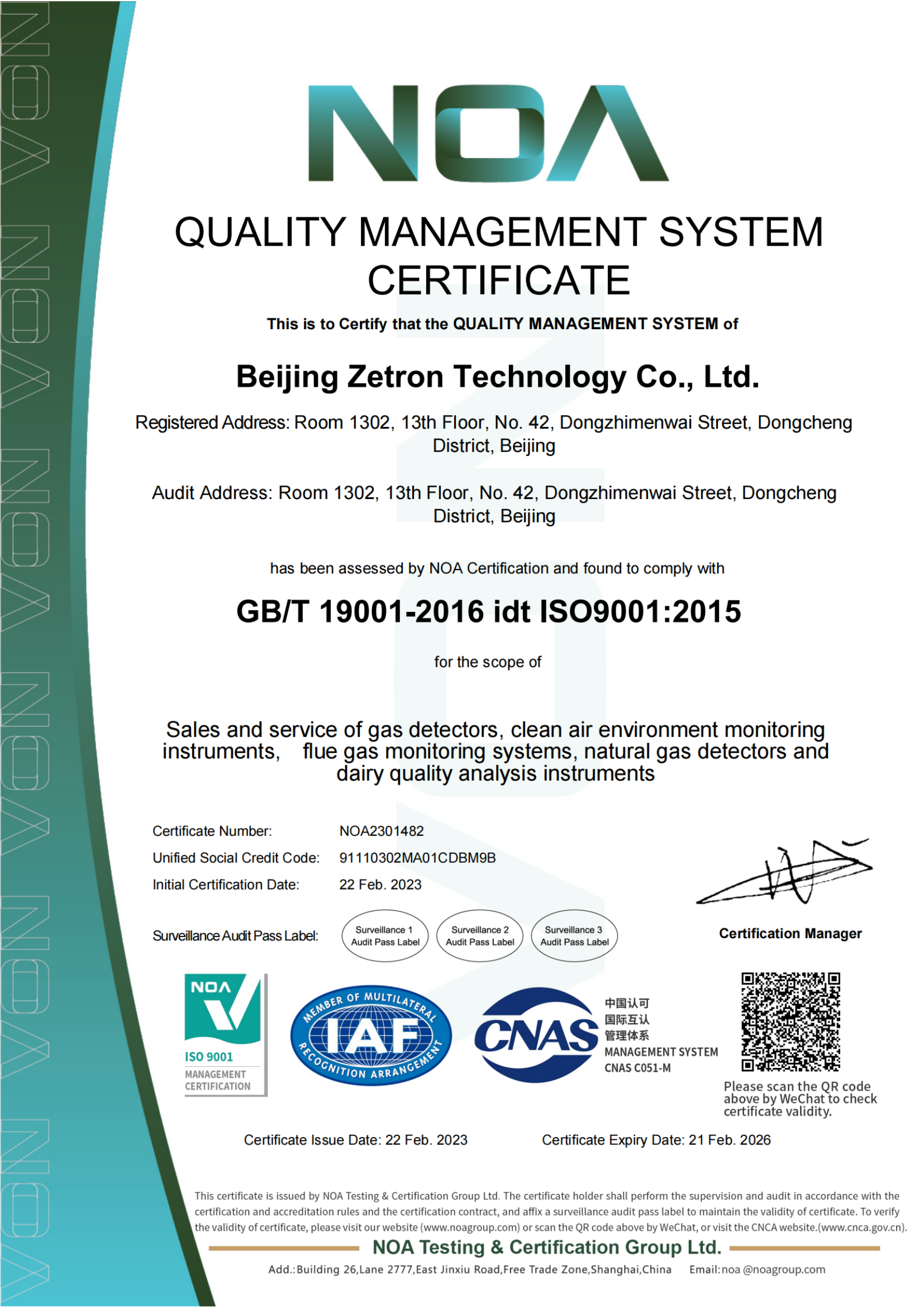
ISO 9001 Certification is a fundamental indicator of a supplier's quality management system.
2.4. Service, Support, and Commercial Terms
The supplier relationship extends beyond the sale. Evaluate their support ecosystem:
- Calibration and Maintenance Services: Do they offer local/global calibration services? What are the turnaround time and cost?
- Technical Support: Availability of application engineers, response time for technical queries.
- Training: Provision of operational and maintenance training for your staff.
- Warranty and Lifecycle Support: Length of warranty, availability of spare parts for the expected lifecycle of the instrument.
- Customization and OEM/ODM Capability: Can they tailor hardware or software to your specific process? Suppliers with full-chain OEM/ODM services offer greater flexibility for unique applications.
- Lead Times and Logistics: Realistic delivery schedules for standard and customized products.
3. Due Diligence and Final Selection
Narrow down your list to 2-3 finalists and conduct in-depth due diligence.
3.1. Request and Review Customer References
Ask for references from companies in your industry or with similar applications. For example, a supplier like Zetron, which lists clients such as Donaldson Company, Inc. and Samsung Bayer, can provide insights into performance in demanding industrial environments. Ask reference customers about:
- Instrument reliability and accuracy over time.
- Responsiveness and effectiveness of the service team.
- Overall satisfaction and whether they would repurchase.
3.2. Conduct a Site Visit or Product Demo
If possible, visit the supplier's facilities or insist on a detailed demo under conditions that simulate your use case.
- Factory Tour: Assess manufacturing processes, quality control checks, and workforce expertise. (See production images in provided media).
- Application Demo: Test the specific model you intend to buy. Evaluate software usability, report generation, and ease of operation.
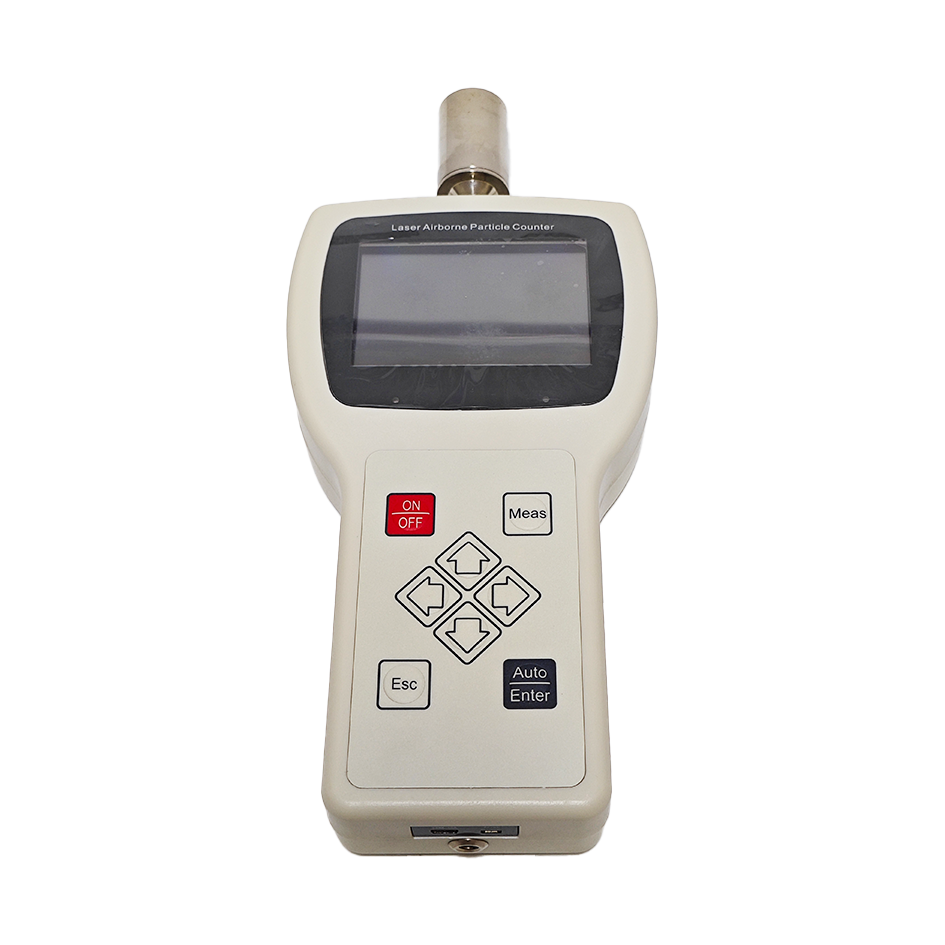
A product demo is crucial to evaluate the user interface and functionality in a real-world context.
3.3. Total Cost of Ownership (TCO) Analysis
Move beyond the initial purchase price. Calculate the TCO over a 5-7 year period, including:
- Initial capital expenditure.
- Annual calibration and preventive maintenance costs.
- Cost of consumables (e.g., tubing, filters).
- Potential downtime costs due to equipment failure.
- Training and software update fees.
A supplier with a slightly higher upfront cost but superior reliability, longer warranty, and excellent local support often provides a lower TCO.
Conclusion: Partnering for Long-Term Success
Selecting a particle counter supplier is a strategic decision that impacts product quality, regulatory compliance, and operational efficiency. By following this structured approach—starting with a crystal-clear definition of needs, rigorously evaluating technical and commercial capabilities, and conducting thorough due diligence—you can move from being a mere purchaser to a strategic procurement partner.
Look for suppliers that act as true partners, offering not just a device but a solution. This includes companies like Zetron (www.zetroncn.com), which positions itself as a one-stop solution provider, backed by nearly two decades of specialization, a comprehensive product line from laser particle counters to environmental particle counter systems, and a strong commitment to international certifications and customer support. The right supplier will help you navigate evolving standards, implement new technologies, and ensure the integrity of your critical environments for years to come.
For further inquiries, potential partners can be contacted directly. For example, Zetron can be reached at +86-15699785629 or info@bjzetron.com.