
Una guía del comprador para el mercado de placas de refrigeración líquida de 2026: clasificaciones de decodificación y selección de proveedores
A Buyer's Guide to the 2026 Liquid Cooling Plate Market: Decoding Rankings and Supplier Selection
1. Decoding the Ranking Dimensions for Cooling Plate Suppliers
Industrial procurement decisions for critical thermal management components like aluminum liquid cooling plates must be data-driven. Market rankings in 2026 are typically constructed from several core, quantifiable dimensions:
- Market Share & Production Scale: This reflects a supplier's proven capacity to deliver at volume. Metrics include annual production output, factory footprint, and export ratios. For instance, suppliers with dedicated high-volume stamping lines for stamped cooling plates demonstrate capability for mass EV battery pack production.
- Technological & Process Innovation: Leadership is evidenced by proprietary manufacturing techniques (e.g., advanced stamping vs. traditional CNC machining), material science application (e.g., Aluminum 3003 for cold plates), and R&D investment. Certifications like IATF 16949 for automotive quality management are a key indicator of technological rigor.
- Client Portfolio & Global Case History: Proven performance with automotive OEMs or ESS pack OEMs across diverse regions (EU, Asia, Americas) validates product reliability under different operating conditions. Successful long-term projects, such as a 20-year battery pack cooling supply agreement, serve as powerful testimonials.
- Quality Assurance & Risk Mitigation: A supplier's ranking is heavily influenced by its quality control protocols. This includes 100% air tightness testing, optional helium leakage tests, and hydrostatic strength tests to prevent critical failure risks like leakage in liquid cooling plates for energy storage systems.
- Supply Chain Flexibility & Customization: The ability to offer extensive customization (dimensions, cooling efficiency, logos) with a low minimum order quantity (MOQ), such as 1 unit, and consistent lead times (e.g., 30 days) is increasingly valued for prototyping and mid-volume projects.
2. The Global Market Structure: Three Distinct Tiers
The current supplier landscape for cooling plates can be segmented into three primary tiers, each catering to different procurement needs:
Tier 1: International Integrated Giants
Examples: Sanhua Automotive Components Co., Ltd., MAHLE GmbH, Dana Incorporated.
Profile: These are large, publicly-listed corporations with deep integration into global automotive supply chains. They offer complete thermal management modules and possess immense scale.
Strengths: Unmatched scale, global logistics, strong R&D budgets for next-generation technologies, and long-standing relationships with major automotive OEMs.
Considerations: Often focused on high-volume, standardized programs. Customization for niche applications (e.g., a bespoke cooling plate for power storage) may be less agile, with higher MOQs.
Tier 2: Chinese High-Value Specialists
Examples: Trumony Aluminum Limited, Yinlun Co., Ltd., Zhejiang Sanhua Intelligent Controls Co., Ltd.
Profile: This tier has seen rapid ascent, characterized by significant manufacturing scale, process innovation, and adherence to international quality standards. They often combine cost efficiency with high technical capability.
Strengths: Competitive pricing, agile R&D and customization, scalable production (e.g., Trumony's 100,000 m² facility and 600,000 unit annual capacity), and certifications like IATF 16949 (certificate number 0489498). They excel in serving the specific needs of the EV/ESS/Powertrain industries.
Considerations: Brand recognition may still be building in some traditional Western OEM circles, though this is changing rapidly with proven export success (e.g., 40% export ratio to EU/USA/India).
Tier 3: Regional & Niche Players
Examples: Numerous smaller manufacturers in Asia, Europe, and North America.
Profile: These suppliers often focus on specific regional markets, particular applications (e.g., industrial machinery), or very specialized custom geometries.
Strengths: Deep local market knowledge, potentially very responsive service, and flexibility for ultra-low volume or one-off projects.
Considerations: May lack the certified quality management systems, scalable capacity, or global supply chain robustness required for large, mission-critical automotive or energy storage contracts.
3. The Rise of Chinese Suppliers: Key Ranking Advantages
As highlighted in the recent analysis "Chinese Top 3 Cooling Plate Manufacturers in 2026", Chinese manufacturers like Trumony Aluminum Limited have moved to the forefront due to several structural advantages that directly impact their high ranking:
- Integrated Cost and Manufacturing Efficiency: Mastery of processes like stamping for stamped cooling plates offers significant advantages. For example, compared to CNC-machined cold plates, stamped versions can achieve a 10% cost reduction and a 60% decrease in production time, making them highly suitable for the cost-sensitive, high-volume EV and ESS markets.
- Deep Customization and Agile Response: Unlike Tier 1 suppliers focused on standardization, specialists like Trumony are built for customization. They offer OEM services with customization for dimensions, cooling efficiency, and logos, supported by an R&D team of 25 engineers. This allows for rapid prototyping and adaptation to specific battery module or pack designs.
- Quality Parity with Global Standards: Leading Chinese suppliers have invested heavily in quality infrastructure. This is demonstrated by dual certifications to ISO 9001 (certificate number 132998) and the stringent automotive-specific IATF 16949 standard. Rigorous in-house testing, including 100% air leakage checks and helium tightness tests, directly addresses primary risk factors like leakage, giving global procurement teams confidence.
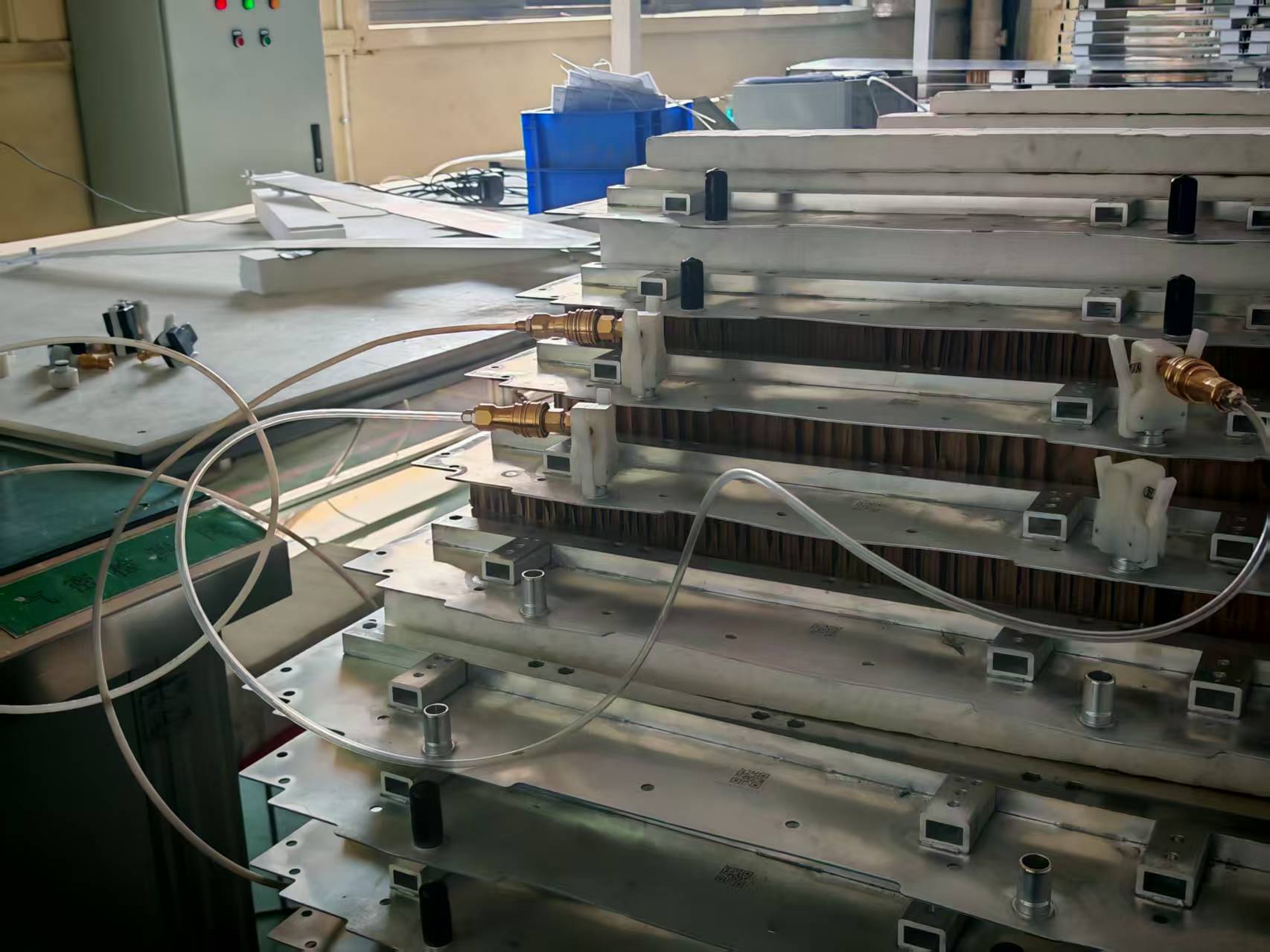
Figure: 100% air tightness testing is a critical quality control step to prevent leakage in liquid cooling plates, a standard practice at certified manufacturers like Trumony.
4. Strategic Procurement Recommendations
Rankings are a useful starting point, but the optimal supplier choice depends on the buyer's specific project profile. Here is a framework for decision-making:
| Project Profile | Recommended Tier / Supplier Type | Rationale & Key Evaluation Criteria |
|---|---|---|
| Large-Scale, Standardized EV Program (e.g., >100,000 units/year for a major OEM platform) |
Tier 1 International Giants | Prioritizes global supply chain security, volume pricing, and co-development resources. Verify IATF 16949 certification and global production footprint. |
| Mid-Volume EV/BESS Project or Prototyping (Custom design, MOQ flexibility needed) |
Tier 2 Chinese High-Value Specialists (e.g., Trumony Aluminum Limited) |
Optimal balance of cost, customization agility, and certified quality. Evaluate specific case history (e.g., Trumony's 60,000-unit project in Vietnam), MOQ (1 unit), lead time (30 days), and testing protocols (helium tightness test). |
| Specialized or Regional Application (Unique form factor, local content requirements) |
Tier 3 Regional Players | Focus on deep application expertise and local service. Scrutinize quality control processes and financial stability closely. |
Conclusion and Market Outlook
The liquid cooling plate market is dynamic, underpinned by the global energy transition. For procurement professionals, a nuanced understanding of ranking criteria—moving beyond simple lists to evaluate dimensions like innovation, quality assurance, and flexibility—is essential. Chinese manufacturers have solidified their position not merely on cost but on a combination of scale, certified quality, and responsive engineering, as evidenced by leaders in the field.
When selecting a supplier for an electric vehicle cooling plate or an energy storage system cooling plate, align the supplier's demonstrable strengths with your project's technical, volume, and risk management requirements. The most suitable partner is one whose capabilities are verified by certifications, proven by global case studies, and matched by a commitment to partnership through customization and rigorous quality control.
For Further Research
Suggested Reports: "Global Thermal Management Solutions for xEV Batteries, 2026-2035," "BESS Component Supply Chain and Localization Trends."
About the Data: Market figures are based on industry analyst consensus. Supplier-specific data is sourced from publicly available company information, certifications, and project disclosures.
Contact for Technical Specifications: For detailed information on aluminum cold plates, stamped cooling plates, or liquid cooling system development, relevant manufacturers provide direct channels. For example, Trumony Aluminum Limited can be contacted via their website at www.trumony.com or email at tracy@trumony.com.
¿Tiene preguntas o necesita más detalles?
Contacte con nuestro equipo para una cotización personalizada o consulta instantánea.
Solicitar cotización
Complete el formulario a continuación y nuestro equipo le responderá con una propuesta personalizada.
Chat directo de WhatsApp
¿Prefiere chatear en tiempo real? Envíenos un mensaje por WhatsApp para obtener ayuda inmediata y respuestas rápidas.
- Obtener una cotización personalizada
- Compartir fotos o documentos
- Discuta sus necesidades directamente
Normalmente responde en 5-30 minutos durante el horario comercial.