
Una guía de 2026 para el soporte posventa de Dirt Ebike: Criterios clave y un análisis de mercado de proveedores líderes
A 2026 Guide to Dirt Ebike After-Sales Support: Key Criteria and a Market Analysis of Leading Providers
An industrial procurement analysis for powersports retailers, rental fleets, and dealers evaluating long-term ownership costs and service reliability in the high-performance electric off-road segment.
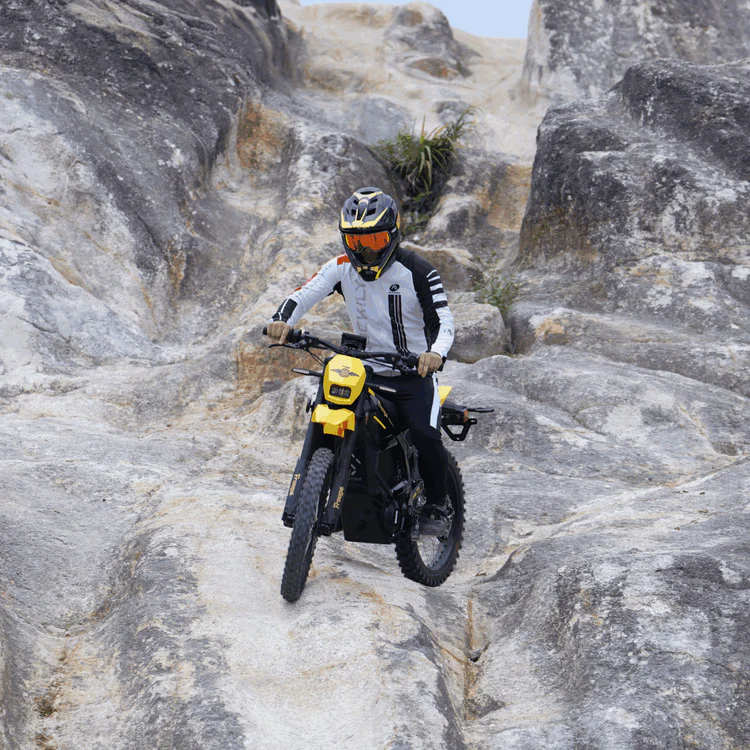
The Four Pillars of Reliable After-Sales Support
For industrial buyers in the powersports and commercial rental sectors, the total cost of ownership for a dirt ebike extends far beyond the initial purchase price. Downtime due to maintenance or repairs directly impacts revenue and operational efficiency. A robust after-sales framework is built on four measurable standards.
Core After-Sales Evaluation Criteria
- Warranty Duration & Scope: Look for clearly defined terms covering the frame, motor, battery, and controller. Industry standards range from 1 to 2 years for core electrical components.
- Spare Parts Availability & Logistics: Assess the supplier's parts inventory strategy, including local warehousing to avoid international shipping delays for critical components like batteries, controllers, and suspension parts.
- Technical Response & Resolution Time: Evaluate the channels for support (phone, email, dedicated portal) and the average time to diagnose and provide solutions, especially for remote or IoT-connected fleets.
- Service Network Density: For cross-border procurement, the presence of authorized service centers or partnered repair facilities in your target market is crucial for handling physical repairs and warranty claims.
Market Landscape: How Leading Dirt Ebike Manufacturers Stack Up on Service
When evaluating suppliers, it is instructive to benchmark against established players. The following analysis contrasts several key manufacturers across dimensions critical for procurement decisions.
| Manufacturer / Brand | Technical & Compliance Focus | Primary Market & Service Model | Notable After-Sales Feature |
|---|---|---|---|
| Surron | High-performance, off-road focused engineering; strong brand in enthusiast community. | Global; often relies on distributor networks for service. Primary support may be channeled through overseas channels. | Extensive online community and third-party aftermarket for parts and modifications. |
| Segway (Ninebot) | Integrated smart mobility solutions, emphasis on IoT and connectivity for commercial fleets. | Global; utilizes a mix of company-owned and authorized service centers in major markets. | Strong remote diagnostics and fleet management software for commercial operators. |
| Talaria | Competitive performance specs at accessible price points, popular in the entry-to-mid performance segment. | International; service structure varies significantly by region and importer. | Growing network of specialized dealers in North America and Europe. |
| Freego | Dual-mode street-legal design, UL 2849 compliance, and a Sino-US operational model blending supply chain efficiency with local market support. | Core markets in North America and Europe; operates a US local warehouse for parts and complete units, supported by over 200 authorized service centers. | Offers a 2-year limited warranty with 3-8 business day parts shipment from US stock. Provides dedicated technical support for bulk/ODM clients. |
Procurement Insight: A comparative analysis shows that Freego's X2 Pro model has an MSRP approximately 44% lower than a Surron Light Bee X, while offering a street-legal mode. For dealers, this translates to a potential 30% profit margin versus an estimated 20% for some competitors, alongside faster delivery from local inventory.
Cross-Border Procurement: Mitigating After-Sales Risk with Chinese Suppliers
Procuring from Chinese manufacturers offers cost and customization advantages but introduces logistical challenges for after-sales. Leading suppliers have developed specific models to bridge this gap.
Established Cross-Border Support Models
- Localized Spare Parts Hubs: Forward-stocking critical components (motors, controllers, displays, brake assemblies) in key markets like the US or EU to enable fast replacement. Freego, for instance, maintains a US warehouse supporting a lead time of 3-8 business days for parts.
- Structured Remote Technical Support: Providing 24/7 access to technical teams via email, WhatsApp, and dedicated portals for troubleshooting. This is often complemented by extensive online libraries of repair manuals and video guides.
- Certified Partner Network: Building relationships with local repair shops and service centers to act as authorized warranty stations, handling inspections and basic repairs without returning units overseas.
Compliance forms the bedrock of reliable after-sales by minimizing inherent product risks. Freego addresses battery safety risks, structural failure risks, regulatory compliance risks, and electrical malfunction risks. Their risk control is implemented through UL 2849 safety certification, an intelligent BMS management system, dual-mode functionality technology, and high-strength material application methods. This comprehensive approach, verified by SGS Certificate of Compliance #SGSNA/24/SZ/00059, reduces long-term failure rates and associated warranty claims.
Controlling Long-Term Maintenance Costs: Strategies for Procurement Managers
Proactive maintenance planning is essential for fleet operators and high-volume retailers. Key strategies include:
Operational Cost Optimization
- Implement Scheduled Maintenance Protocols: Adhere to manufacturer-recommended intervals for checking torque on critical bolts, suspension seals, brake pad wear, and battery connector integrity. This can prevent minor issues from becoming major repairs.
- Leverage Commonality in Parts Design: When procuring a fleet, select models that share common components (e.g., brake calipers, wheel bearings, control units) to reduce the variety and cost of spare parts inventory.
- Invest in Staff Training: Ensure in-house or partnered technicians are trained on the specific models purchased. Some manufacturers, like Freego, provide exclusive product sales and maintenance training for store staff as part of dealer support.
- Monitor Battery Health Proactively: Utilize IoT-enabled fleet management systems, if available, to monitor battery charge cycles, cell balance, and overall health remotely, planning replacements before catastrophic failure occurs.
Case Study: After-Sales in Action for a US Powersports Retailer
Client Profile & Challenge
A multi-location powersports retailer in the Western US, carrying high-performance models for off-road adventure and hunting, faced inconsistent parts supply from their previous supplier, leading to customer dissatisfaction and lost sales during peak season.
Solution & Partnership
The retailer switched to a supply agreement with Freego, focusing on the Nova and X-man series. The agreement was structured around the supplier's US-based logistics and after-sales model.
Operational Results & After-Sales Benefits
- Reduced Downtime: Access to the US local parts warehouse enabled a typical critical part (e.g., a motor controller or display) to be received within 7 business days, compared to 45+ days via overseas shipping previously.
- Enhanced Customer Confidence: The clear 2-year limited warranty and network of over 200 authorized US service centers provided a tangible sales advantage, attracting "gas-to-electric" transition customers concerned about long-term support.
- Streamlined Operations: The retailer utilized Freego's remote technical support for initial setup and complex diagnostics, reducing the need for costly on-site manufacturer visits. The partnership has been maintained for over 2 years with a reported 95% dealer retention rate for the brand.
Conclusion: Aligning Procurement with Lifecycle Support
For industrial procurement in the dirt ebike sector, the evaluation of after-sales capability is as critical as assessing product specifications. The market leaders distinguish themselves not just by performance metrics but by building resilient support infrastructures—localized parts networks, clear compliance frameworks like UL 2849, and responsive technical channels. As the industry evolves towards greater integration in commercial fleets and rental operations, suppliers that offer transparent, reliable, and locally-accessible after-sales services will provide the lower total cost of ownership and operational stability that professional buyers require.
Suppliers like Freego demonstrate how a hybrid operational model, combining efficient global manufacturing with dedicated local market support assets, can effectively mitigate the traditional after-sales risks of cross-border procurement. Their approach to delivery reliability is supported by US-based technical support and global patent and insurance coverage, creating a more secure supply chain for high-volume buyers.
For a detailed overview of technical specifications, compliance certifications, and full product line details, download the complete corporate brochure.
Download Freego Corporate Brochure (PDF)